Balcony Gardening for Beginners: How to Start a Small Garden
A calm starting order for an empty balcony: check the rules, watch the sun and wind, measure the floor, then choose containers, potting mix and plants that match your light.
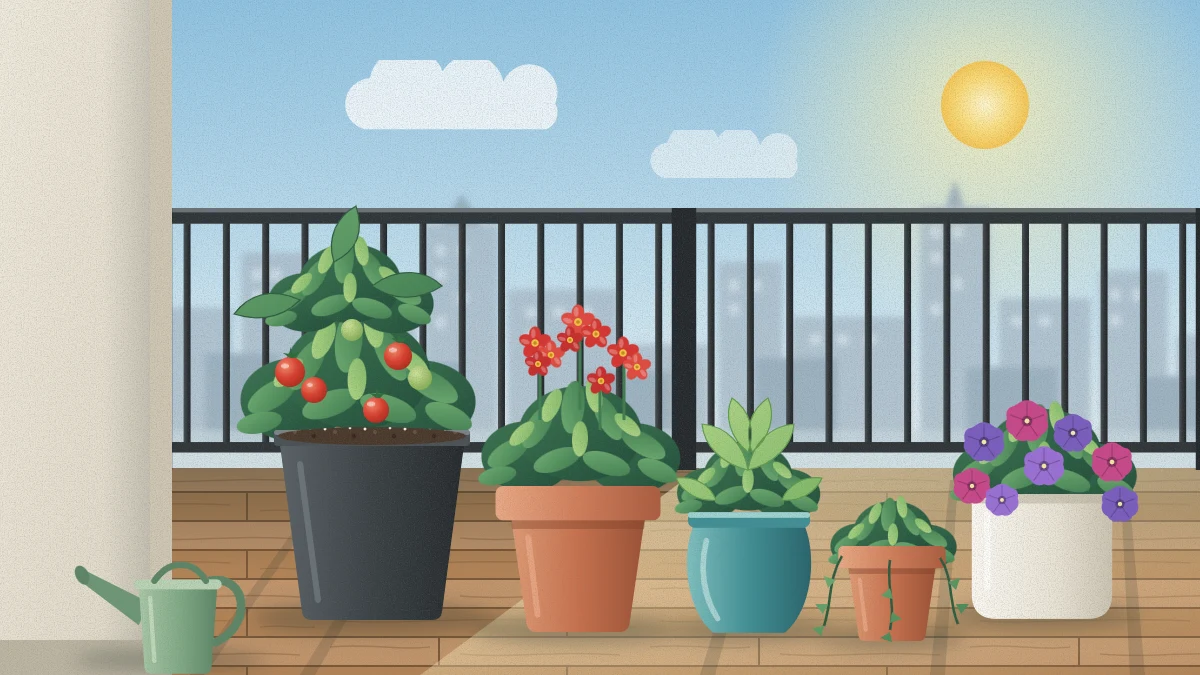
An empty balcony can look like a blank page: a floor, a railing and no obvious place to begin. The good news about balcony gardening for beginners is that the first steps cost nothing. They are mostly looking, measuring and asking a couple of questions before any plant comes home.
This guide gives you the order to work in, so you spend money once and on the right things. Each step points to a more detailed guide when you are ready for it.
How a balcony differs from a garden bed
Advice written for backyards only partly applies several floors up. Five differences shape almost every decision you will make.
- Everything grows in containers. Roots cannot reach deeper for water or nutrients. The plant has only what is in the pot, so the size of the container and the quality of the potting mix matter a great deal.
- Light comes from one side. A wall, the balcony above and neighboring buildings block part of the sky. Two balconies in the same building can receive very different amounts of sun.
- Wind is stronger. Higher floors and corner units catch more of it. Wind dries the mix, tears soft leaves and can tip tall pots.
- Water has to be carried in and has to drain somewhere. There is usually no hose, and what runs out of the pots should not land on the neighbor below.
- The building has rules. A lease or a set of building rules may say what you can place, hang or attach, and the structure itself has limits you cannot see.
Step 1: Check the rules and what the balcony can carry
Start here because the answer can change your whole plan. Read your lease or the building rules, or ask the landlord or building management, about three things: what is allowed on the balcony, whether anything may be attached to the railing, wall or ceiling, and what the balcony is allowed to carry.
Weight is easy to underestimate. Wet potting mix, water and a mature plant weigh far more than the empty container you carried up the stairs. Nobody can judge a balcony from a photo or a general rule, so ask the people responsible for the building before you plan large containers or many pots.
Good to know
Pots on the floor, low, stable and inside the railing, are the simplest safe start. Anything hung or mounted, such as railing planters or hanging baskets, needs more care: use secure mounting made for the purpose, check the building rules or lease before attaching anything, consider the weight of wet mix, water and the container, and follow the manufacturer instructions for the planter and its hardware. Never hang planters over the street or a balcony below.
Step 2: Watch the sun and wind for a few days
Light decides which plants will do well, and it is the one thing you cannot change. On a clear day, look out every hour or two and note where direct sun reaches the floor. Add up the hours. As rough guides, full sun means about six hours or more of direct sun, part sun or part shade roughly three to six, and shade less than about three. The full method is in the guide to checking how much sun your balcony gets.
Notice the wind at the same time. Which corner is calm? Where does a light object slide or flutter? A sheltered corner by the wall is usually the best home for your first pots.
Step 3: Measure the floor space
Measure the length and width, then mark the things that must stay clear: the swing of the door, a path to walk, and the drain. What is left is your real growing area, and it is nearly always smaller than it looks.
A quick sketch on paper is enough at this stage. If you want to place seating and containers properly before buying, the step-by-step guide to mapping a small balcony on paper takes you through it.
Step 4: Choose containers and potting mix
Three points cover most of what a beginner needs to know about containers.
- Drainage holes are not optional. Water must be able to leave the pot, and a saucer underneath keeps it off the floor and the balcony below.
- Bigger is easier. A larger volume of potting mix holds water longer and gives roots more room. Tiny pots dry out fast, especially in sun and wind.
- Low and wide is steadier than tall and narrow.
Material, shape and size are compared in the guide to choosing balcony planters.
Fill containers with potting mix made for containers, not garden soil, which packs down in a pot and drains poorly. For general background, see University of Illinois Extension.
Step 5: Pick plants that match your light
Now, and only now, go plant shopping. Read the label on each plant and compare it with the hours of sun you counted. A sun-loving plant in shade grows thin and flowers poorly; a shade plant in hot afternoon sun often scorches.
For a first season, favor compact plants: annual flowers and herbs such as basil or thyme in sun, leafy herbs and salad leaves in part shade.
Wait to put tender plants outside until after the danger of frost has passed in your area. A local extension service can tell you when that usually is.
Start with three to five pots
It is tempting to fill the whole balcony in one weekend. A small start teaches you more. Three to five medium or large pots on the floor are enough to learn how fast your balcony dries, how the wind behaves and how much time you enjoy spending on it.
Group the pots together in the most sheltered spot with suitable light. Grouped pots shade each other’s sides, slow the wind a little and are quicker to water in one trip.
Caring for your first plants
Containers do not follow a calendar. How fast a pot dries depends on the plant, the size and material of the container, the potting mix, sun, heat, wind and the season. Instead of a routine, check: push a finger about 2 in (5 cm) into the mix, and water when it feels dry at that depth. The guide to watering balcony plants explains the checks in detail.
Beyond that, a few minutes of regular looking is the most useful habit. Turn over a leaf, remove spent flowers, and notice which pot dries first. Before a storm, bring in or secure anything light.
Frequently asked questions
How many plants should a beginner start with on a balcony?
Three to five pots is a comfortable start. That is enough to learn how quickly the potting mix dries, how the wind moves and how much sun each spot receives, without creating more care than you have time for. Add more once the first group is growing well.
Can I use soil from the ground in balcony pots?
It is better not to. Soil from the ground packs down in a container, drains slowly and is heavy when wet. A potting mix made for containers stays looser, lets extra water run out through the drainage holes and gives roots the air they need.
What should I do before buying plants for a balcony?
Check the lease or building rules and ask what the balcony is allowed to carry. Then count the hours of direct sun on a clear day, notice which corners are windy and measure the usable floor. With those notes, plant labels become much easier to judge.