Balcony Gardening Mistakes: 10 Common Beginner Errors
Ten common reasons balcony plants struggle, from the wrong light and pots without drainage holes to unchecked hanging planters, each with a simple fix.
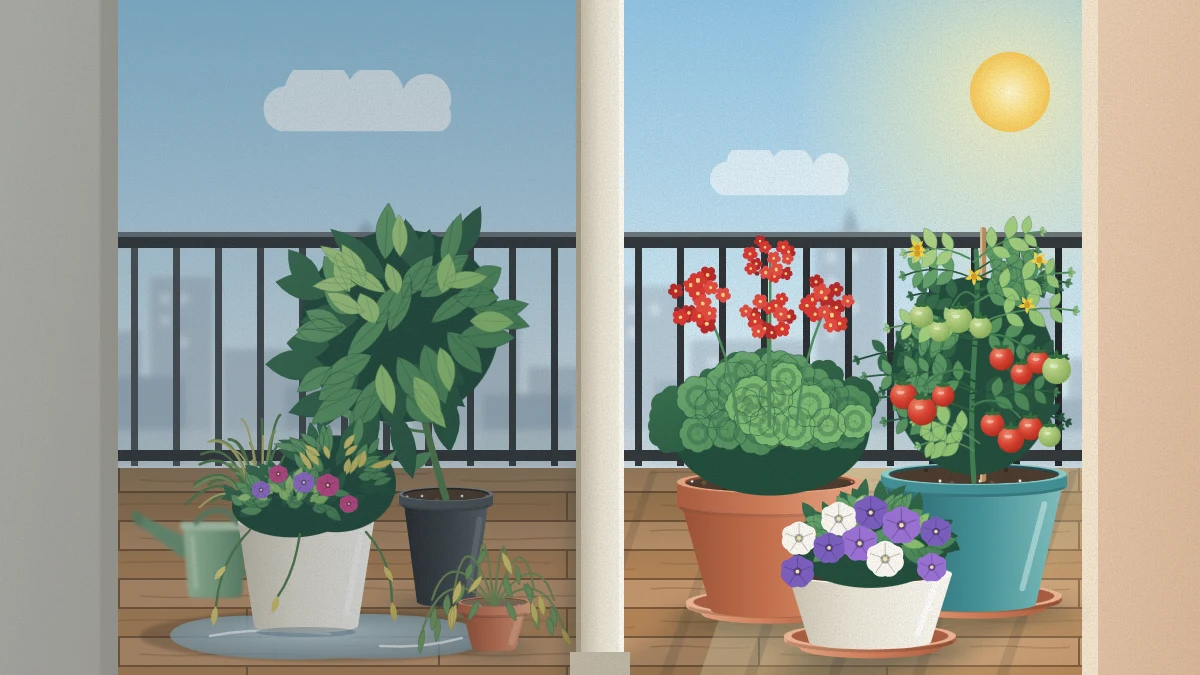
When balcony plants keep struggling, the cause is rarely bad luck or a lack of talent. Most balcony gardening mistakes are small decisions made at the start, such as the wrong pot, the wrong spot or the wrong fill, and nearly all of them can be corrected in an afternoon.
Here are ten of the most common, grouped by where they happen. Each entry says why it matters and what to do instead.
Light and wind mistakes
1. Buying plants before checking the light
A plant that needs full sun will grow thin and flower poorly in shade, and a shade plant can scorch in hot afternoon sun. No amount of care makes up for the wrong light.
Instead: count the hours of direct sun on a clear day before you shop. As rough guides, full sun is about six hours or more, part sun or part shade roughly three to six, and shade less than about three. The method is in the guide to assessing balcony sunlight.
2. Ignoring wind
Wind dries potting mix and leaves quickly, tears large soft foliage and tips tall pots. Balconies on higher floors and corners usually get more of it.
Instead: keep containers low, wide and on the floor, group them so they shelter each other, and stand tall plants against the wall. Choose compact plants with small leaves for the exposed side.
Container mistakes
3. Using pots without drainage holes
Water that cannot leave the pot collects at the bottom, pushes air out of the mix and leaves roots sitting wet. Roots in that state often rot, and the plant may wilt even though the mix is soaked.
Instead: use containers with drainage holes and a saucer underneath. More on this in the guide to drainage for balcony containers.
4. Choosing containers too small for the plant
A small pot holds little potting mix, so it dries fast, heats up in sun and leaves roots with nowhere to go. Plants in undersized pots tend to stall and need constant attention.
Instead: match the pot to the mature size on the plant label, not the size of the seedling. When unsure, go one size up.
5. Crowding too many plants into one pot
A packed pot looks full on the first day and then the plants compete for water, nutrients and light. Poor air movement between crowded stems is also commonly associated with leaf diseases.
Instead: follow the spacing on the label and accept some bare mix at planting time. It fills in within weeks.
Potting mix and feeding mistakes
6. Filling containers with garden soil
Soil from the ground packs down in a pot, drains slowly and is very heavy when wet. It may also bring weed seeds and pests with it.
Instead: use a potting mix made for containers, which stays loose and drains well. The guide to potting soil for containers explains what to look for, and the University of Maryland Extension has more detail on growing media.
7. Forgetting to feed
Potting mix holds a limited supply of nutrients, and every watering washes a little out through the drainage holes. Plants that live in the same mix all season can run short, and pale leaves and slow growth are one possible result, though light and watering problems can look similar.
Instead: check whether your mix already contains fertilizer, then choose a fertilizer suited to your plants. Follow the product label for rate and timing, and never use more.
Watering mistakes
8. Watering by the calendar
A fixed schedule ignores what actually dries a pot: the plant, the container size and material, the potting mix, sun, heat, wind and the season. The same routine can drown a plant in a cool, cloudy week and leave it parched in a hot, windy one.
Instead: check before you water. Push a finger about 2 in (5 cm) into the mix, or lift one side of the pot to feel its weight. Water thoroughly when the mix feels dry at that depth, and wait when it is still moist.
9. Letting water drip onto the balcony below
Water running off your floor carries potting mix and fertilizer onto someone else’s furniture or laundry.
Instead: put a saucer under every pot, water slowly so the mix absorbs it, and empty saucers that are still full a little while later. Keep the floor drain clear.
The safety mistake
10. Hanging or mounting planters without checking
This is the one mistake on the list that can hurt someone. Wet potting mix, water and a mature plant weigh far more than the empty container, and you cannot judge by eye what a railing, wall or ceiling will carry.
Instead: treat pots on the floor, low, stable and inside the railing, as the default. For anything else, go through the checks below first, and read the guide to railing planters before buying one.
Good to know
Before you hang or attach anything: use secure mounting made for the purpose; check the building rules or lease, or ask the landlord or building management; consider the weight of wet mix, water and the container; and follow the manufacturer instructions for the planter and its hardware. Keep planters on the inner side of the railing, and never hang them over the street or a balcony below. Before storms, bring in or secure anything light or hanging.
How to work out which mistake is yours
One symptom rarely points to one cause. Yellow leaves, for example, are commonly associated with too much water, too little water, low light and hunger alike. A few checks narrow it down.
- Feel the mix at finger depth. Soggy for days suggests a drainage or watering problem; dry and pulling away from the pot suggests the opposite.
- Tip the pot and look for drainage holes. Check that they are not blocked.
- Compare the label with your light. Count the hours of direct sun where the plant actually stands.
- Look at the roots. If they circle the inside of the pot in a tight mass, the container is too small.
- Think back. When was the plant last fed, and has the weather turned windy or hot?
Fix one thing at a time
It is tempting to repot, move, feed and water all at once. Then, if the plant recovers, you do not know why, and if it does not, you have stressed it further. Change the most likely cause, give the plant a week or two, and watch the new growth instead of the old leaves, which rarely recover.
Frequently asked questions
What is the most common mistake in balcony gardening?
Buying plants before knowing how much direct sun the balcony receives is probably the most frequent. Light is the one condition you cannot change afterward. Counting the hours of sun on a clear day first makes every later choice easier.
Why do balcony plants keep dying even with regular watering?
There are several possibilities. Watering on a routine can keep the potting mix too wet, especially in a pot without drainage holes. The plant may also be in the wrong light, in a container that is too small, or short of nutrients. Check the mix, the holes, the light and the roots in turn.
Can a struggling balcony plant recover after a mistake is fixed?
Often it can, if the roots are still healthy. Correct the most likely cause, then watch the new growth over a week or two. Damaged older leaves usually do not recover and can be removed once fresh, healthy leaves appear.