Balcony Garden in Summer: Heat, Sun and Thirsty Pots
Why balconies get so hot in midsummer and what helps: checking and watering deeply, keeping roots cooler, adding shade with care, and preparing for trips and storms.
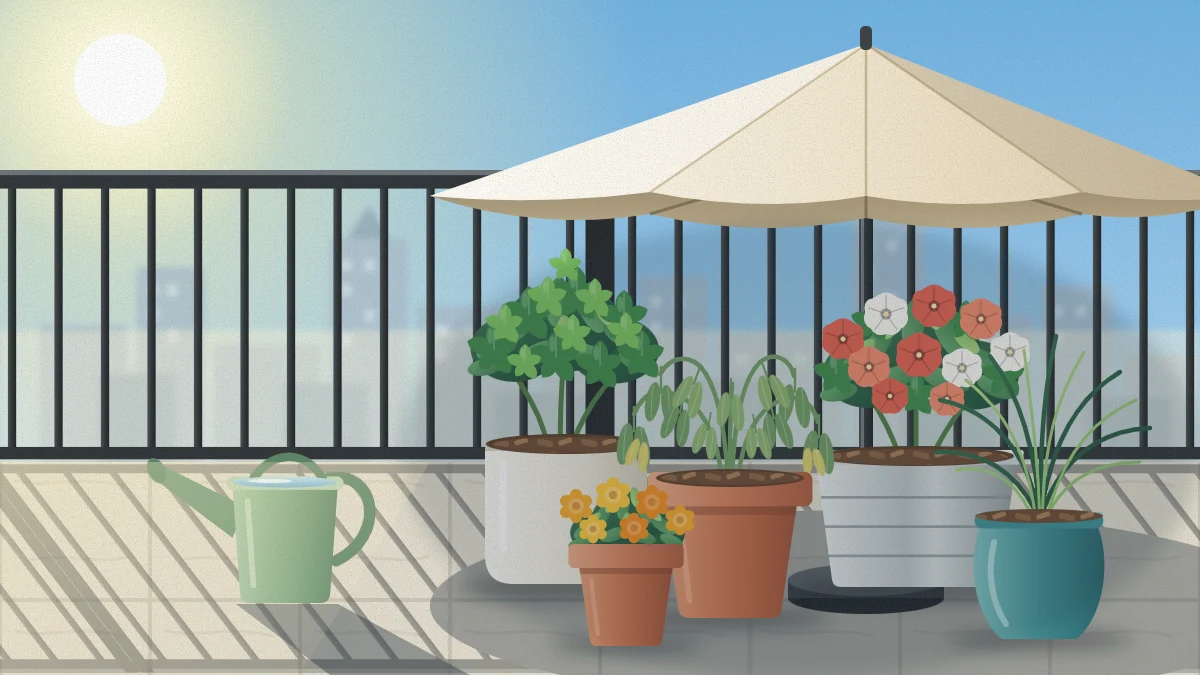
By midsummer a balcony can feel less like a garden and more like an oven. Pots that stayed moist for days in spring are dry by lunchtime, leaves droop in the afternoon, and flowers that were covered in buds seem to stall.
Looking after a balcony garden in summer is mostly about two things: getting water to the roots when they need it, and keeping those roots cooler. A few small changes to where and how your pots sit make a real difference.
Why balconies run hotter than gardens
A balcony is surrounded by hard surfaces. Walls, glass doors and paving absorb sun during the day and reflect or release that heat onto your plants, sometimes well into the evening.
Containers add to the effect. A pot in direct sun heats up from the sides, and dark-colored containers warm faster than pale ones. Roots near the pot wall can be damaged by that heat even when the top of the plant looks fine.
Wind is the third factor. Moving air pulls moisture from leaves and from the potting mix, so a breezy balcony dries out faster than a still one at the same temperature. If wind is a constant feature of your space, see the guide to a windy balcony garden for plant choices and shelter.
Water: check more often, water deeply
In hot spells, check your pots at least once a day, and look at small pots and baskets in both the morning and the evening. Checking is not the same as watering: push a finger into the mix and water only the pots that are dry at that depth.
When a pot does need water, water it thoroughly, until it begins to run from the drainage holes. Morning is usually the best time, because the plant enters the hottest hours with a full supply. The full method, including what to do when dry mix repels water, is in the guide to watering balcony plants.
Tip
Many plants wilt at midday in strong sun and recover by evening, even when the mix is moist. Check the mix before adding water. A plant that is still limp the next morning in dry mix is the one that needs a drink.
Keep the roots cooler
Lowering the temperature of the pot is often more effective than adding more water. Try several of these together:
- Group pots closely. They shade each other’s sides and create a slightly more humid pocket of air.
- Move the most stressed plants. A spot with morning sun and afternoon shade is easier on most plants than one that bakes from noon onward.
- Use larger containers. More potting mix holds more water and heats up more slowly.
- Choose lighter colors. Pale containers absorb less heat than dark ones.
- Double-pot. Slip a plastic pot inside a slightly larger decorative one so the outer wall takes the sun. Make sure water can still drain from both.
- Mulch the surface. A layer of fine bark, straw or gravel about 1 in (2.5 cm) deep shades the mix and slows evaporation.
Adding shade without adding risk
An umbrella or a length of shade cloth can take the edge off the afternoon sun. Use one only if your building allows it, fix it as its maker instructs, and take it down or close it when wind picks up, because a shade structure catches wind like a sail.
The same care applies to anything raised off the floor. Hanging baskets and railing planters dry out fastest in summer and are at their fullest when watered and in full growth.
Good to know
For hanging baskets, railing planters and shade structures, use secure mounting made for the purpose and follow the manufacturer instructions for the item and its hardware. Check the building rules or your lease, or ask the landlord or building management, before attaching anything. Keep the weight in mind: wet potting mix, water and a mature plant weigh far more than the empty container. The simplest arrangement is still containers on the floor, low, stable and inside the railing.
What heat does to plants
Several summer symptoms look alarming but are common responses to heat. They overlap with other causes, so check the mix and look for pests before deciding what is going on.
- Midday wilting that recovers by evening is often the plant reducing water loss, not a sign that it is dry.
- Sunscald shows as pale, bleached or papery patches on leaves and on the exposed side of tomatoes and peppers. It is commonly associated with sudden exposure to strong sun.
- Blossom drop. Tomatoes, peppers and some flowering annuals may shed flowers without setting fruit during very hot spells, and often resume when temperatures ease.
- Bolting. Lettuce, cilantro and other cool-season plants tend to go to seed in heat and long days. Leaves usually turn bitter at that point. Replace them with heat-tolerant plants and sow again when the weather cools.
Feeding, deadheading and trimming
Frequent summer watering washes nutrients out of the mix, so feeding continues through the season. Follow the product label for rate and timing, and never use more. Water first if the mix is dry, and skip feeding a plant that is badly heat-stressed until it has recovered.
Deadheading, which means removing spent flowers, keeps many annuals blooming instead of setting seed. If petunias and similar plants have become long and bare at the base, cut the stems back by about a third. They usually respond with bushier growth and a fresh round of flowers within a few weeks.
Going away in summer
A few days away in hot weather can undo a season of care. Before you leave:
- Ask a neighbor or friend to check the pots, and show them how to test the mix with a finger.
- Move containers together into the shadiest part of the balcony, away from hot walls.
- Water everything thoroughly and top up the mulch.
- Take hanging and railing planters down and set them on the floor in the shade.
If you travel regularly, self-watering planters give you a reservoir to draw on, though the hungriest plants can still empty one quickly in a heat wave.
Before a summer storm
Summer heat often ends with a thunderstorm and sudden gusts. When one is forecast, bring in or lay down anything that can blow over or fall: light pots, tall top-heavy plants, baskets, umbrellas, cushions and empty containers.
Set what you cannot bring indoors on the floor against the building wall. The National Weather Service has general advice on wind safety.
Frequently asked questions
Why do balcony plants wilt in the afternoon even after watering?
Many plants droop in strong midday sun to reduce water loss and recover by evening, even in moist mix. Reflected heat from walls and glass makes this more likely on a balcony. Check the mix with a finger before adding water, and consider moving the pot to a spot with afternoon shade.
How can I keep pots from overheating on a hot balcony?
Group pots so they shade each other, move the most stressed into afternoon shade, and mulch the surface of the mix. Larger and lighter-colored containers heat up more slowly than small dark ones. You can also slip a pot inside a slightly larger one so the outer wall takes the sun.
What should I do with balcony plants when I go on vacation?
Ask someone to check the pots and show them how to test the mix with a finger. Before leaving, move containers together into the shadiest spot, water thoroughly and add mulch. Self-watering containers help for short trips, but hungry plants can still empty a reservoir quickly in hot weather.