Self-Watering Planters: How They Work and When They Help
How a reservoir, wick, fill tube and overflow hole keep a container moist, which balcony plants benefit, which stay too wet, and how to set up and look after a self-watering planter.

If you leave for work before the sun reaches your balcony and come home to drooping plants, the idea of a pot that waters itself is very appealing. Self-watering planters do not quite do that, but they do something useful: they store water under the plant and hand it over gradually.
They suit some plants and some balconies much better than others. Knowing how the parts work makes it easier to decide whether one would help you, and how to avoid the few ways they go wrong.
How a self-watering planter works
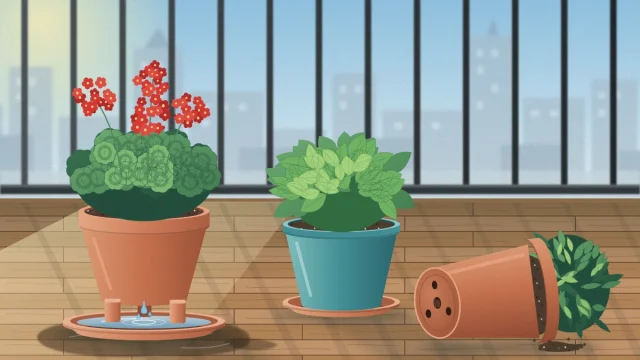
An ordinary pot holds water only in the potting mix. A self-watering planter adds a second space: a reservoir at the bottom, separated from the mix by a platform or an inner pot.
Water moves up from the reservoir into the mix by capillary action, the same effect that draws water up a paper towel dipped in a glass. As the plant uses moisture and the mix near the roots dries, more is pulled up from below.
Most designs share four parts:
- The reservoir. A chamber under the mix that holds the stored water.
- The wick. Either a fabric strip or, more often, a column or pocket of potting mix that dips down into the reservoir and carries water upward.
- The fill tube. An opening at the surface that lets you pour water straight into the reservoir.
- The overflow hole. An opening in the side wall at the top of the reservoir. Extra water from filling or from rain runs out here, so the mix above never sits flooded.
Some planters add a level indicator, usually a small float, that shows how much water is left. The overflow hole is the part to check before buying. Without one, an outdoor planter can fill with rain and drown the roots.
When they help most
A reservoir earns its place where pots dry quickly and steady moisture matters:
- Thirsty plants in full sun. Tomatoes, peppers, many annual flowers and leafy greens use a lot of water in warm weather and respond well to an even supply. The guide to a balcony vegetable garden explains which crops suit containers.
- Hot, windy balconies. Upper floors, corners and balconies that face the afternoon sun dry small pots fast.
- People who are out all day. A reservoir can carry a plant through the hottest hours when nobody is home to notice it wilting.
They are one of several ways to cope with heat. Others are covered in the guide to a balcony garden in summer.
What they do not do
The name promises more than the product delivers.
The reservoir still needs refilling
You are watering less often, not never. A large tomato plant in a hot, windy spell may empty a reservoir within a day, while the same planter in cool spring weather might stay topped up for a week or more. Look at the indicator or peer down the fill tube regularly until you know how your own planter behaves.
Some plants stay too wet
Plants that prefer to dry out between waterings are a poor match for a constantly moist root zone. Rosemary, lavender, thyme and succulents commonly do better in an ordinary pot with free drainage, where you control when water arrives.
New plants need watering from the top
A young plant’s roots sit near the surface, above the zone the wick keeps moist. For the first few weeks, water gently from the top as you would any pot, checking the mix with a finger first. Once the plant is growing strongly, the reservoir can take over.
Salts can build up
In a normal pot, water running out of the bottom carries away dissolved fertilizer salts. In a self-watering planter water mostly travels upward, so those salts can gather near the surface, sometimes showing as a pale crust. Now and then, water slowly from the top until water runs from the overflow hole to rinse the mix through.
Setting one up
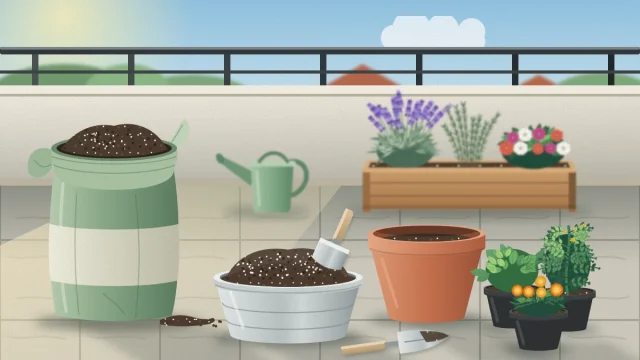
The mix matters more here than in any other container, because the mix is part of the mechanism.
- Read the maker’s assembly instructions and find the overflow hole. Make sure it will not be blocked by a wall or saucer.
- Use a light, soilless potting mix. Garden soil and dense, compost-heavy mixes wick poorly and stay waterlogged.
- Moisten the mix before filling. Dry mix does not wick.
- Pack the wicking column or pocket firmly with damp mix so it makes good contact with the water below, then fill the rest more loosely.
- Plant, then water thoroughly from the top once to settle everything and start the capillary flow.
- Fill the reservoir through the tube until water appears at the overflow hole, then stop.
Checking and caring for it through the season
A reservoir changes how you check a pot; it does not replace checking. The finger test still works at the surface, and the general method is explained in the guide to watering balcony plants.
- If the reservoir has water but the mix is dry and the plant is wilting, the wick has probably lost contact. Water from the top to restart it.
- If the mix is wet and the plant still looks limp or yellow, too much moisture is one possibility. Let the reservoir run empty for a while and see whether the plant improves.
- Follow the fertilizer label for rate and timing, and never use more. Because little water drains through, extra fertilizer stays in the planter.
- Empty the reservoir before frost. Water that freezes inside can crack the planter.
A full reservoir adds weight
Water is the heaviest thing in any container garden, and a self-watering planter deliberately holds more of it. A large planter with a full reservoir, wet mix and a mature plant weighs far more than the empty box you carried home, and it is difficult to move once filled. Set it where it will stay, then fill it.
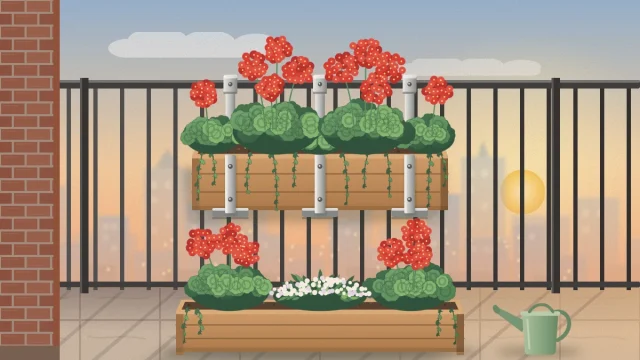
For that reason the floor is the natural place for these planters: low, stable and inside the railing. Some are sold in versions for railings, and those call for more care, not less.
Good to know
Count the water when you think about what your balcony or railing may carry, and ask the building management or owner if you are unsure. For any self-watering railing planter, use secure mounting made for the purpose, check the building rules or your lease or ask the landlord before attaching anything, consider the weight of wet mix, a full reservoir and the container, and follow the manufacturer instructions for the planter and its hardware.
Frequently asked questions
How long does the water in a self-watering planter last?
There is no fixed answer. It depends on the size of the reservoir, the plant, the heat, the sun and the wind. A big plant in hot weather may empty it within a day, while in cool weather the same reservoir might last a week or more. Check the level regularly at first.
Can you overwater plants in a self-watering planter?
Yes, in the sense that the mix stays constantly moist. Plants that like to dry out between waterings, such as rosemary, lavender and succulents, can struggle. Make sure the planter has an overflow hole so rain cannot flood it, and let the reservoir run empty now and then.
What potting mix should I use in a self-watering container?
A light, soilless potting mix, moistened before you fill the planter. The mix itself carries water up from the reservoir, and dense materials such as garden soil do this badly and stay waterlogged. Pack the wicking section firmly so it stays in contact with the water.