Balcony Garden in Winter: Protecting Pots and Plants
What to do with balcony containers when the season ends: which plants are finished, which come indoors, how to protect pots that stay out, and how to store the rest.
When the first hard frost blackens the basil and the petunias collapse, it is easy to shut the balcony door until spring. An hour or two of work at the end of the season protects the plants worth keeping and saves you from replacing cracked pots next year.
A balcony garden in winter needs sorting more than tending. Decide what is finished, what comes indoors and what stays out, then protect the pots that remain. In mild-winter regions the picture is different, and that is covered at the end.
Why pots are more exposed than the ground
In a garden bed, the surrounding earth insulates roots and changes temperature slowly. In a container, the root ball is surrounded by cold air on every side, with only a thin wall between the roots and the weather. Roots are generally less cold-tolerant than the stems and buds above them.
The result is that a plant is less hardy in a pot than its tag suggests for planting in the ground. A common rule of thumb is to choose perennials and shrubs rated for a zone or two colder than your own if they will spend winter outdoors in a container. Treat that as a rough guide, not a promise, and look up your zone on the USDA Plant Hardiness Zone Map.
Repeated freezing and thawing adds stress, as does waterlogged mix that freezes solid. Wind makes all of it worse by drying evergreen leaves when frozen roots cannot replace the water.
Sort your plants into three groups
| Group | Examples | What to do |
|---|---|---|
| Annuals | Petunias, marigolds, basil, tomatoes, peppers | Finished for the year; compost them and empty the pots |
| Tender perennials | Geraniums, rosemary in cold areas, other frost-sensitive herbs | Bring indoors before frost to a bright, cool spot |
| Hardy perennials and shrubs | Plants rated colder than your zone, dwarf evergreens | Leave outside with protection |
Pull annuals once frost has ended them. Compost healthy plants and put any that had disease or heavy pest problems in the trash. Shake the old mix off the roots and empty the pots.
Before bringing tender plants indoors, check them for pests, including the undersides of the leaves. Indoors, they need the brightest window you have and much less water than in summer, since growth slows in low light.
Protect the pots that stay outside
The aim is to keep the root ball from swinging between extremes and to keep it from sitting in water.
- Move pots against the building wall. The wall gives off a little warmth and blocks wind. Choose the most sheltered side of the balcony.
- Group them tightly. Pots packed together protect one another, with the most cold-sensitive in the middle.
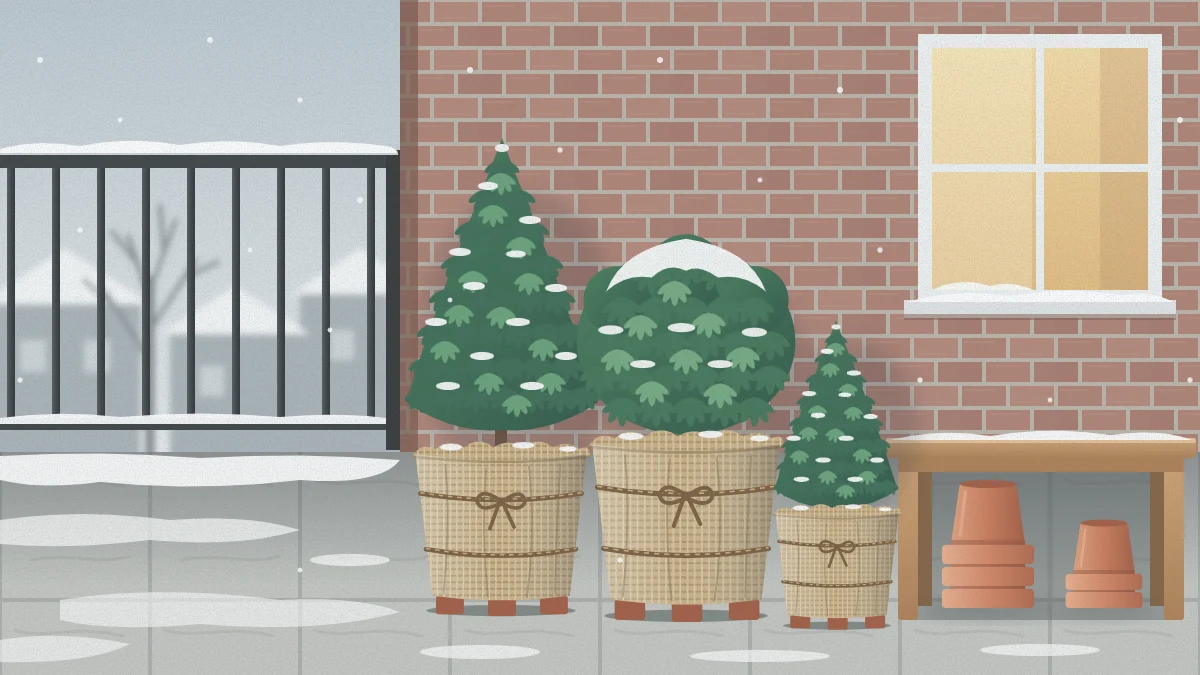
- Wrap the container, not the plant. Burlap, bubble wrap, old blankets or a layer of straw or leaves held in place by burlap insulate the root ball. Leave the top of the mix and the drainage holes uncovered.
- Raise pots on pot feet. Water must be able to leave the pot. A container frozen to the floor with blocked drainage holes is a common cause of winter losses.
- Mulch the surface. A layer of bark or straw about 2 in (5 cm) deep over the mix adds insulation from above.
- Water occasionally. In a dry spell, when the mix is not frozen and feels dry at finger depth, water lightly during the warmer part of the day. Evergreens in particular can dry out over winter.
Good to know
Large containers filled with wet mix are heavy, so slide or wheel them rather than lifting, and get help if you need it. Consider that weight when you gather many pots in one area, and ask building management if you are unsure what the balcony is allowed to carry. When you refit baskets or railing planters in spring, use secure mounting made for the purpose, follow the manufacturer instructions for the planter and its hardware, and check your lease or building rules before attaching anything.
Empty and store vulnerable containers
Water expands as it freezes. Terracotta and thin ceramic absorb moisture or hold wet mix against rigid walls, and they can crack or flake when that mix freezes. Empty them, brush them clean, let them dry, and store them upside down or under cover so they cannot fill with rain and snow.
Thick plastic, resin, fiberglass, wood and metal generally tolerate freezing better, which is one reason they suit plants that stay out all year. The guide to choosing balcony planters compares the materials in more detail.
A few other jobs belong here:
- Take down hanging baskets and railing planters, empty them, and inspect the hooks, brackets and straps for rust, cracks and wear before they are used again.
- Drain self-watering reservoirs and leave the fill tube and overflow open, since trapped water can split the container when it freezes.
Stacked pots and bagged supplies take up room, so plan where they will go. The article on balcony garden organization has storage ideas for small spaces.
Snow, ice and the floor drain
Keep the balcony’s floor drain or scupper clear of leaves, potting mix and ice so meltwater can run off instead of pooling and refreezing. Check it after leaf fall and again after heavy snow.
A blanket of snow on the mix is not a problem for hardy plants; it insulates. Snow that bends evergreen branches can be brushed off gently with a soft broom, working upward. Leave ice alone, because frozen branches snap easily. Follow your building’s guidance on clearing snow from the balcony itself.
A little winter interest
A winter balcony does not have to be bare. Hardy dwarf evergreens, ornamental grasses left standing and shrubs with colored stems give you something to look at from indoors. Cut evergreen branches pushed into a pot of mix will hold their color for weeks in cold weather.
If your winters are mild
Where frost is rare or light, winter is a growing season, not a pause. Cool-season plants such as lettuce, spinach, parsley, cilantro, pansies and violas often grow better in those months than in summer heat.
Pots dry far more slowly in cool weather, so keep checking the mix before watering and make sure saucers are not holding water. Keep an old sheet or frost cloth handy to drape over tender plants on the occasional cold night, and remove it in the morning.
Wherever you live, winter is also the time to make notes on what worked. They will make the spring balcony garden checklist quicker to work through.
Frequently asked questions
Can potted perennials stay outside on a balcony all winter?
Some can. Roots in a container are more exposed than roots in the ground, so a common rule of thumb is to choose plants rated a zone or two colder than your own. Move the pots against the building wall, group them, wrap the containers and raise them so they drain.
Do I need to water balcony plants in winter?
Occasionally. Plants that stay outside still lose moisture, especially evergreens in wind. In a dry spell, check the mix when it is not frozen and water lightly if it feels dry at finger depth. Plants brought indoors need much less water than in summer because they grow slowly in low light.
Why do terracotta pots crack in winter?
Water expands when it freezes. Terracotta absorbs moisture, and wet potting mix inside a rigid pot pushes outward as it freezes, which can crack or flake the walls. Emptying the pots, letting them dry and storing them upside down or under cover reduces the chance of damage.