Fertilizing Container Plants: A Simple Guide for Balconies
Why plants in pots run out of nutrients, what the three numbers on a fertilizer label mean, and how to feed balcony containers without overdoing it.
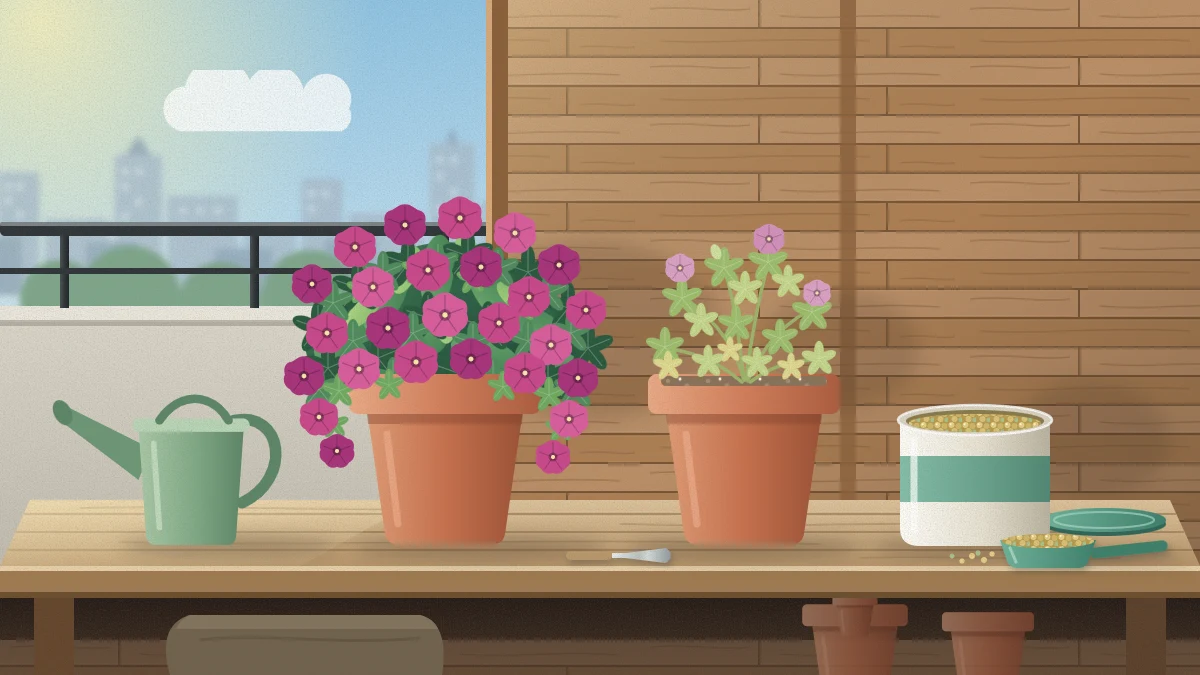
Pots that look wonderful in late spring and tired by midsummer are a familiar balcony story. The plants were not neglected. They simply used up what the potting mix had to offer, and nothing replaced it.
Fertilizing container plants is less complicated than the shelves of products suggest. You need to understand what a label is telling you, pick one of two simple approaches, and resist the urge to add extra.
Why plants in pots need feeding
A plant in the ground can send roots outward in search of nutrients. A plant in a pot has only what is inside the container. Most potting mixes are made from ingredients such as peat, coir, bark and perlite, which hold air and water well but supply few nutrients on their own. The guide to choosing potting soil for containers explains what those ingredients do.
Watering adds to the problem. Each time water runs out of the drainage holes, it carries some dissolved nutrients with it. A pot that is watered often in hot weather loses them faster than one that is watered rarely.
What the three numbers on the label mean
Fertilizer labels show three numbers separated by dashes. They describe the proportions of three main nutrients, always in the same order:
- Nitrogen (N) supports leafy green growth.
- Phosphorus (P) is linked with root development, flowering and fruiting.
- Potassium (K) supports general plant functions, including the movement of water and the quality of flowers and fruit.
A product with three similar numbers is often described as balanced or all-purpose, and it suits most mixed balcony plantings. Products sold for tomatoes or flowering plants usually have a lower first number relative to the others. You do not need a different product for every pot; one general fertilizer covers most beginner balconies.
Two simple approaches
Slow-release granules
These are small coated pellets that you mix into the potting mix at planting or scatter on the surface. They release nutrients gradually over a period stated on the label, usually a matter of months. Warmth and moisture affect how quickly they release, so in a hot summer the supply may run out earlier than the label suggests.
Their appeal is convenience. You apply them once and the pot receives a steady, low supply without further effort.
Water-soluble or liquid fertilizer
These are dissolved or diluted in the watering can and applied as you water, at the interval on the label. They act quickly, which makes them useful for hungry plants and for correcting a pot that has clearly run short, but they also wash through quickly and need repeating.
Many gardeners combine the two: granules at planting as a base, then a liquid feed later in the season for the most demanding plants. If you do this, treat each product’s label as the upper limit rather than adding the two at full strength without thought.
Tip
Read the bag before you add anything. Some potting mixes already contain fertilizer, often enough for the first weeks or months. Adding more on top at planting can give young roots too much.
Which plants need more, and which need less
Appetites vary widely, and matching the feeding to the plant matters more than the product you choose.
| Appetite | Typical plants | What that means |
|---|---|---|
| Hungry | Tomatoes, peppers, petunias and other annuals that flower nonstop | Feed through the growing season, as the label directs |
| Moderate | Leafy greens, basil, parsley, most foliage plants | A base feed is often enough, with a top-up if growth slows |
| Light | Rosemary, thyme, lavender, succulents | Little feeding; too much gives soft, weak growth |
Fruiting crops are the most demanding plants most balconies hold. The article on planning a balcony vegetable garden covers which crops are realistic in pots and how large their containers should be.
Four rules that prevent harm
- Follow the product label for rate and timing, and never use more. Extra fertilizer does not produce extra growth. It builds up as salts in the mix and can damage roots.
- Feed moist mix, not bone-dry mix. Fertilizer applied to dry roots is more likely to scorch them. If the pot is dry, water with plain water first and feed afterward. The guide to watering balcony plants shows how to check.
- Ease off at the end of the season. As days shorten and growth slows, plants use less. Perennials and shrubs that will stay outdoors over winter do not benefit from a late push of soft new growth.
- Do not feed a stressed plant. A plant that is wilting from heat, newly repotted, waterlogged or under attack by pests needs the underlying problem dealt with first.
Signs of too little and too much
None of these signs points to a single cause. Watering problems, cold nights, poor light, pests and crowded roots can all produce similar symptoms, so check those before reaching for fertilizer.
Signs commonly associated with too little feeding:
- Older, lower leaves turning pale green or yellow while new growth stays greener
- Slow growth during warm weather when the plant should be active
- Fewer and smaller flowers than earlier in the season
Signs commonly associated with too much:
- Brown, scorched-looking leaf edges and tips
- A white crust on the surface of the mix or around the rim of the pot
- Lush, dark, leafy growth with few flowers, which is often linked with excess nitrogen
Flushing a pot with plain water
If you suspect a build-up, or you can see a crust on the surface, flush the pot. Scrape away any loose crust, then water slowly with plain water until a generous amount has run from the drainage holes. Let the pot drain, and repeat once or twice. Empty the saucer each time so the pot does not sit in the runoff.
After flushing, hold off on feeding for a while and watch the new growth. Leaves that are already scorched will not recover, but fresh leaves should come in clean if the cause has been dealt with.
Storing fertilizer
Keep fertilizer in its original container with the label attached, tightly closed, in a dry place out of direct sun. Store it where children and pets cannot reach it, and never decant it into a food or drink container. Wash your hands after handling it, and rinse the watering can if you also use it for other purposes.
Frequently asked questions
Do I need to fertilize if my potting mix already contains fertilizer?
Not at first. Check the bag to see how long the built-in fertilizer is meant to last, and start feeding only as that period ends or when growth and color begin to fade. Adding more at planting on top of a pre-fertilized mix can give young roots more than they can handle.
Is slow-release or liquid fertilizer better for balcony pots?
Both work. Slow-release granules are convenient because one application feeds for the period stated on the label. Liquid or water-soluble fertilizer acts faster and suits hungry plants such as tomatoes, but it needs repeating at the label interval. Many people use granules as a base and a liquid feed later for demanding plants.
Can too much fertilizer harm container plants?
Yes. Excess fertilizer builds up as salts in the potting mix and can scorch roots. Brown leaf edges and a white crust on the surface are commonly associated with it, though other causes are possible. Flush the pot with plain water, let it drain, and follow the product label for rate and timing from then on.