Balcony Plant Pests: Aphids, Spider Mites and First Steps
How to identify aphids, spider mites, whiteflies, fungus gnats and leaf chewers on balcony plants, and the gentle first steps to take before anything else.

A balcony several floors up feels out of reach for insects, yet they arrive anyway: on the wind, on new plants from the nursery, or on their own wings. Finding sticky leaves or a cluster of tiny bugs on a favorite pot is unsettling, but it is rarely an emergency.
Most balcony plant pests can be managed with close observation and a few physical steps, as long as you start early. Work out what you are looking at first, then act gently and repeat.
Look closely before you do anything
Many problems that look like pests are not. Pale, scorched or dropping leaves are often linked with water, heat, wind or feeding, and those causes are covered in the list of common balcony gardening mistakes. Before you treat anything, confirm that insects are present.
- Turn leaves over. Most small pests feed on the underside.
- Check the newest growth, shoot tips and flower buds.
- Look at the surface of the potting mix and under the rim of the pot.
- Tap a stem over a sheet of white paper and watch for specks that move.
- Use a magnifying glass or your phone camera zoomed in.
Identifying the common culprits
| Pest | What you may see | Where to look |
|---|---|---|
| Aphids | Small, soft, pear-shaped insects in clusters; sticky residue; curled leaves | New growth, buds, leaf undersides |
| Spider mites | Fine pale speckling on leaves; fine webbing in heavier cases | Leaf undersides, hot dry corners |
| Whiteflies | Tiny white insects that fly up in a puff when the plant is disturbed | Leaf undersides |
| Fungus gnats | Small dark flies hovering near the pot | Surface of mix that stays wet |
| Caterpillars and slugs | Chewed holes, dark droppings, or silvery slime trails | Leaves at dusk, under pots and saucers |
Aphids
Aphids may be green, black, yellow or pink. They suck sap from tender growth and leave behind a sticky liquid called honeydew, which can turn black as a sooty mold grows on it. Ants walking up and down a stem are often a clue, because they collect the honeydew.
Spider mites
Spider mites are barely visible to the eye. Their feeding leaves a fine, pale stippling that can make a leaf look dusty or bronzed. They tend to build up in hot, dry, sheltered spots, such as a pot pushed against a sun-baked wall, and on plants that are short of water.
Whiteflies, fungus gnats and chewers
Whiteflies also produce honeydew and gather under leaves. Fungus gnats are more of a nuisance than a threat to established plants; their presence often suggests the mix is staying wet for long periods. Caterpillars and slugs leave obvious holes, and slugs can reach an upper floor hidden in a nursery pot.
First response: the same steps for almost everything
- Isolate the pot if you can. Move it away from its neighbors so pests cannot walk or drift across as easily.
- Remove by hand. Wipe aphids off with a damp cloth or gloved fingers. Pick off caterpillars and slugs, checking again after dark with a flashlight.
- Pinch off the worst parts. A shoot tip crowded with aphids or a leaf covered in webbing can go straight into a sealed bag in the trash.
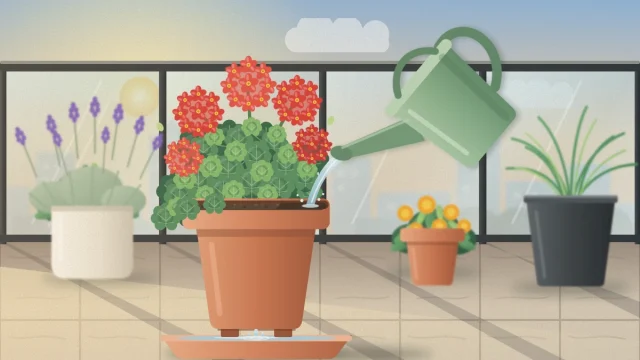
- Use a firm spray of water. Support the stem with one hand and direct a strong stream at the undersides of the leaves to knock pests off. Do it in the morning so the plant dries, and let the runoff fall on your own floor, not on the neighbors.
- Repeat. One round rarely finishes the job. Check and spray again every few days for a couple of weeks, because eggs and missed insects keep the population going.
Extension services describe washing pests off with water as a first step for both aphids and mites. For more detail, see the University of California IPM pages on aphids and spider mites.
For fungus gnats, the main step is to let the top layer of mix dry between waterings and to empty saucers, since the larvae live in wet mix.
Keep plants strong, not soft
Healthy, unstressed plants generally cope with a few pests better than struggling ones. Give each plant the light it needs, water by checking the mix, and avoid crowding pots so tightly that air cannot move between them.
Feeding matters too. Heavy doses of nitrogen push out the soft, lush growth that aphids favor, so follow the label and resist adding more; the guide to fertilizing container plants explains how. Inspect new plants carefully before you bring them home, and keep them apart from the rest for a week or two if you have room.
Helpers visit balconies too
Lady beetles, lacewings, hoverflies and tiny parasitic wasps find aphids even several floors up. Lady beetle larvae look nothing like the adults: they are dark, elongated and slightly spiky, and they eat far more aphids than their parents.
If you see these insects at work, a light infestation may be brought down without further help from you. Spraying anything broad at that point can remove the helpers along with the pests.
If you are considering a pesticide
Physical steps deal with most small outbreaks. If you decide to go further, keep in mind that every pesticide, including insecticidal soaps and oils, is a product with rules for its use.
Good to know
Before buying or using any pesticide, check that the label lists both your pest and your plant. For herbs and vegetables, confirm that it is labeled for edible crops. Then follow the label exactly, including how and when to apply it and any waiting time before harvest.
This matters most for plants you eat. If you grow a balcony herb garden, hand removal and water are usually the simplest choice, since the leaves are the harvest. Wash produce before eating either way.
If you are unsure what the pest is, a local extension service can often help with identification before you spend money on a product that may not suit it.
When to discard a plant
Sometimes the kindest decision for the rest of the balcony is to let one plant go. Consider it when:
- most of the foliage is damaged and the plant keeps declining after two or three weeks of steady effort;
- the pests keep spreading to neighboring pots;
- the plant is an inexpensive annual near the end of its season.
Bag the plant and its potting mix and put them in the trash rather than leaving them on the balcony. Scrub the empty pot and saucer with soapy water and let them dry before reusing them.
Frequently asked questions
Why are the leaves on balcony plants sticky?
Sticky leaves are commonly associated with honeydew, a sugary liquid left by sap-feeding insects such as aphids and whiteflies. Look under the leaves and on new growth just above the sticky patch. If you find insects, wipe or wash them off with water and rinse the residue from the leaves.
How do pests reach a balcony several floors up?
Many arrive on new plants or in their potting mix, which is why inspecting purchases before bringing them home helps. Winged aphids, whiteflies and gnats fly or drift on the wind, and spider mites can travel on air currents too. Height reduces some pests, such as slugs, but does not keep insects away.
Will a spray of water really remove aphids?
A firm stream of water knocks many aphids and mites off the plant, and most do not make it back. It seldom removes all of them in one go, so repeat it every few days for a couple of weeks and check the undersides of the leaves each time. Support the stems so they do not snap.