Potting Soil for Containers: What to Use on a Balcony
Why garden soil fails in pots, what a bag of potting mix should contain, how to read the label, how much to buy, and how to moisten and reuse mix on a balcony.
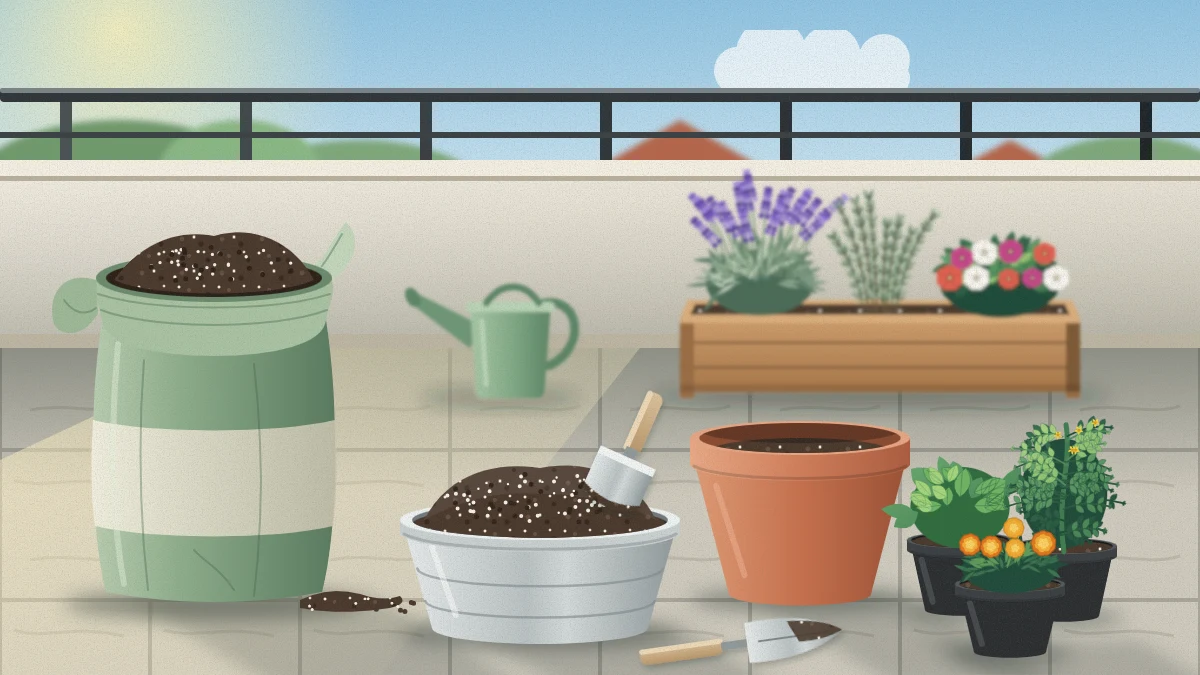
It seems reasonable that soil is soil, and that a scoop from a garden bed would do fine in a pot. It rarely does. The right potting soil for containers is a different material altogether, lighter and more open, made to work in the cramped, fast-draining world inside a pot.
On a balcony the choice is simple once you know what the words on the bag mean. Here is what to look for, what the ingredients do, how much to buy and how to handle the mix when you get it home.
Why garden soil and topsoil fail in pots
In the ground, soil is part of a deep system with worms, roots and layers below it that pull water down and away. Put the same soil in a container and that system is gone. Several things go wrong at once:
- It packs down. Repeated watering presses fine soil particles together until there is little room left for air.
- It drains poorly. Dense soil holds too much water around the roots, even in a pot with good holes.
- It is heavy. Soil weighs far more than potting mix, and you have to carry every bag up to the balcony.
- It can bring problems with it. Weed seeds, insects and disease organisms may come along in soil from a yard.
Bags sold as “garden soil” or “topsoil” are meant for beds in the ground, and they behave much the same way in a pot. For a fuller explanation, see University of Maryland Extension on growing media for containers.
What potting mix actually is
Potting mix is usually soilless, or close to it. Instead of mineral soil it is a blend of light, spongy and gritty materials chosen to do something soil in a pot cannot: hold water and air at the same time.
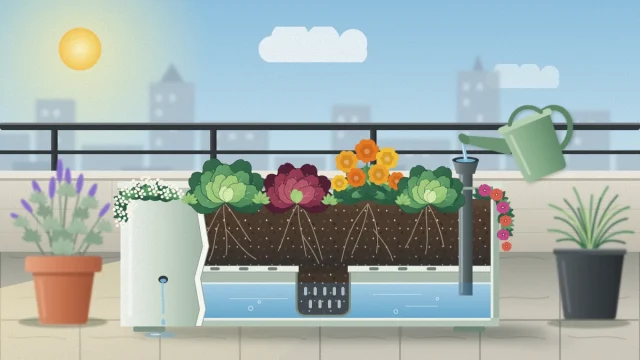
After you water, a good mix stays evenly moist while the extra drains away and air returns to the gaps between particles. That balance is what container roots need, and it works together with the holes in the pot, described in the guide to container drainage.
What the ingredients do
You do not need to blend your own. It still helps to recognize the names on the back of a bag, because each one has a job.
| Ingredient | What it looks like | What it does |
|---|---|---|
| Peat moss or coir | Brown, fibrous, spongy | Holds water and makes up most of the mix |
| Composted bark | Small dark chips | Adds structure so the mix stays open |
| Perlite | White, light granules | Creates air spaces and helps water drain |
| Vermiculite | Shiny tan flakes | Holds some water and nutrients, adds air |
| Compost | Dark and crumbly | Supplies some nutrients and microbial life |
Coir is made from coconut husk and does much the same work as peat.
How to read the bag
Bag fronts are crowded, and similar-looking products sit side by side. A few checks sort them out:
- Look for the words potting mix or container mix. Some bags say “potting soil” and are still soilless; read the ingredient list to be sure.
- Leave anything labeled garden soil, topsoil, raised bed soil or compost for people with beds in the ground.
- Lift the bag. A mix for containers should feel surprisingly light for its size, unless it has been stored outside and soaked by rain.
Mixes with added fertilizer or moisture crystals
Many bags include slow-release fertilizer. That is convenient, not essential, and it changes your routine: the plants are already being fed for the period stated on the bag, so adding more on top can be too much. The guide to fertilizing container plants explains how to plan around it.
Others contain water-holding crystals or a wetting agent. These are optional too. A mix that holds extra moisture can help in hot sun and can stay too wet in shade, so keep checking the mix with a finger rather than assuming it is damp or dry.
How much to buy
Bags list volume, usually in quarts or cubic feet, sometimes in liters. Containers are often sold by diameter, which tells you less than you would hope.
The easiest way to measure a pot is with water. Before planting, fill it with a jug or bucket of known size and count how many it takes. A bucket that holds about 2 gallons (8 L), for example, makes quick work of a large planter. Add your pots together, then buy a little more than the total, because mix settles after the first few waterings.
Moisten the mix before you fill the pot
Dry mix straight from the bag is dusty and often repels water at first. Poured dry into a pot, it can let water run down the inside wall and out of the bottom while the center stays dry.
- Tip the mix you need into a tub or bucket.
- Add water a little at a time and work it in with your hands. Gloves are sensible.
- Stop when the mix is evenly damp and darker in color. A squeezed handful should hold together loosely and release no more than a drop or two.
- Fill the container to about 1 in (2.5 cm) below the rim, so there is room for water to pool briefly before it soaks in.
Reusing last year’s mix
Old mix is not waste. Over a season it breaks down, settles and loses much of its nutrient content, but it can be refreshed. Pull out old roots and stems, break up any clumps, and blend the old mix with new before replanting. University of Maryland Extension suggests about half old and half fresh mix or compost.
The exception is mix from a plant that had a root disease or a serious pest problem. Do not reuse that mix in containers. Bag it and dispose of it, and wash the pot before it is used again.
Early spring is the natural time for this job, alongside the other tasks in the spring balcony garden checklist.
Lightness is an advantage, but wet mix is not light
On a balcony, light potting mix is easier to carry, easier to move once planted, and puts less load on the structure than soil would. That is a real benefit.
Good to know
A bag of dry mix tells you little about a planted pot. Once the mix is wet, with water in the saucer and a grown plant on top, a container weighs far more than it did empty. Before you bring in several large containers, ask the building management or owner what the balcony is allowed to carry.
Frequently asked questions
Can I use garden soil in pots?
It is not a good choice. Soil from a garden bed packs down in a container, holds too much water around the roots and leaves little air. It is also much heavier to carry and may bring weed seeds or disease with it. A bagged potting mix made for containers avoids all of those problems.
Is potting soil the same as potting mix?
The two names are often used for the same product, and many bags called potting soil contain no real soil at all. What matters is the ingredient list: look for peat or coir, bark and perlite or vermiculite, and check that the bag says it is intended for containers.
Does potting mix go bad?
An unopened or well-closed bag kept dry stays usable for a long time, although any fertilizer in it gradually loses strength. Mix that has been left open can dry out, get soaked or pick up insects. If it smells sour or is full of gnats, it is better not to use it for new plants.