Balcony Vegetable Garden: What Can Grow in Containers
An honest look at which vegetables suit a balcony, sorted by hours of sun, with a container-size guide and a realistic idea of how much you can expect to pick.
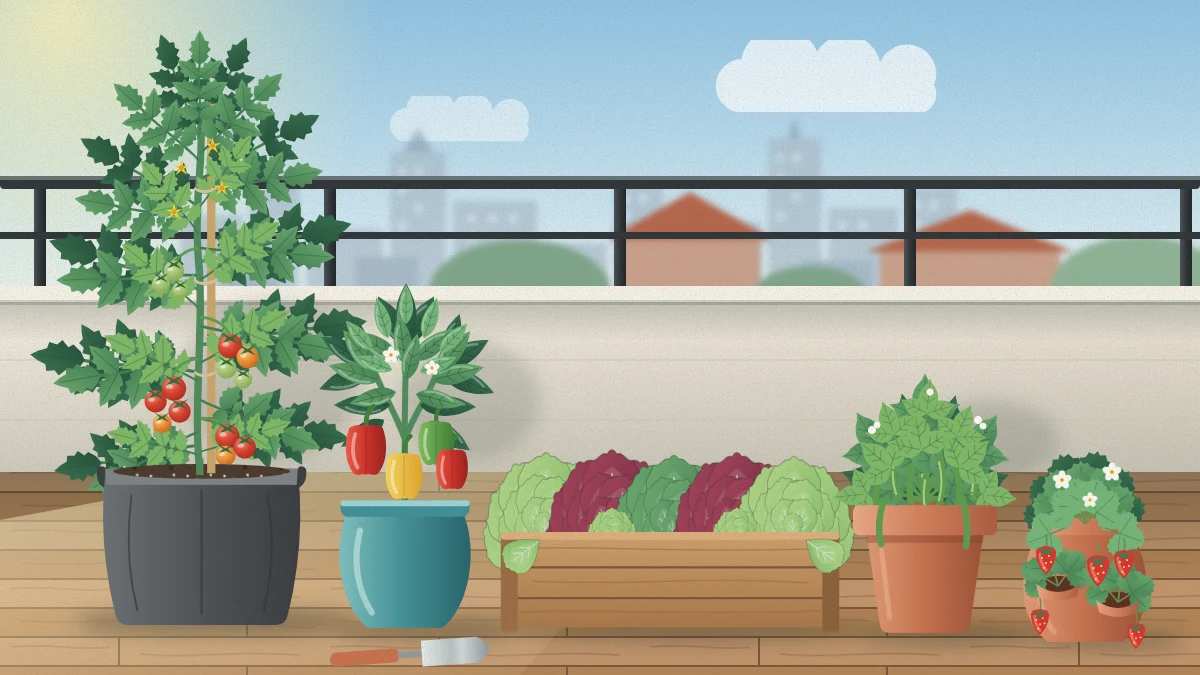
A balcony vegetable garden will not replace your grocery shopping, but it can give you salad leaves cut minutes before dinner, a steady handful of cherry tomatoes, and peppers that ripened in your own pots. The key is choosing crops that fit your sun and your space instead of the ones that look best on a seed packet.
Almost any vegetable can technically grow in a container. What is realistic on a balcony is a shorter list, and it depends on four things you can check before you buy anything.
What decides whether vegetables succeed
- Hours of direct sun. Fruiting crops such as tomatoes and peppers want about six to eight hours or more. Leafy greens and many herbs manage with roughly three to five.
- Container volume. Roots can only use the potting mix they are given. A crop in a pot that is too small dries out fast, runs short of nutrients and stays stunted.
- Steady water. Vegetables are mostly water and grow quickly, so they suffer when the mix swings between soaked and bone dry.
- Regular feeding. Potting mix holds limited nutrients and watering washes them through. Use a fertilizer labeled for vegetables, follow the product label for rate and timing, and never use more.
Sun is the one you cannot change, so start there. Count the hours of direct sun on a clear day during the growing season, then choose from the matching group below.
Vegetables for a full-sun balcony
With about six hours or more of direct sun, the warm-season fruiting crops become possible.
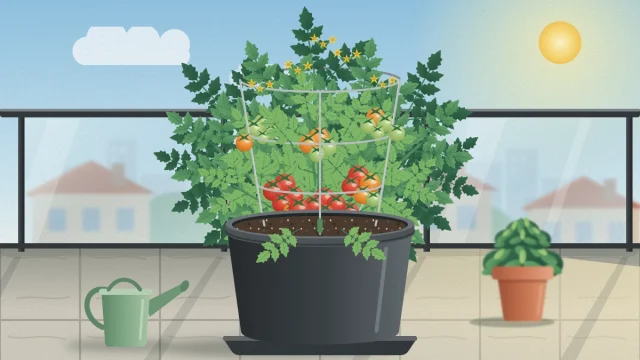
- Compact or patio tomatoes. The classic balcony crop, and the most demanding. The guide to growing tomatoes on a balcony covers variety, pot size and support.
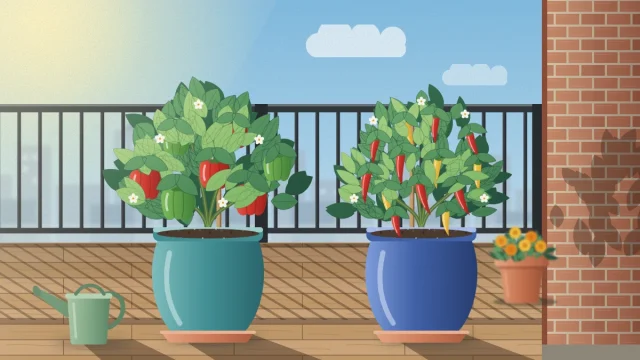
- Peppers. Tidy plants that suit a pot each. Sweet and hot types are compared in growing peppers in pots.
- Bush beans. Quick, undemanding, and they need no support, unlike pole beans.
- Dwarf cucumbers. Choose a bush or container variety and give it a small trellis that stands in the same pot.
- Strawberries. Not a vegetable, but they belong in the same sunny, well-fed containers.
Vegetables for part sun
With roughly three to six hours, skip the fruiting crops and grow leaves and roots. Most of these prefer cool weather anyway.
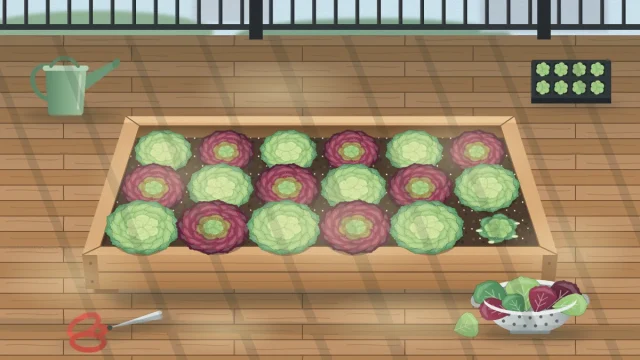
- Lettuce and salad greens. The quickest reward for a beginner; see growing lettuce in containers.
- Spinach and chard. Spinach is a cool-season crop. Chard tolerates more heat and can be picked leaf by leaf for months.
- Radishes. Among the fastest crops from seed, and happy in a shallow container.
- Green onions. Slim, upright and easy to tuck into a trough.
- Peas. Worth trying in cool weather with a short support set inside the pot.
Whatever the crop, look for varieties described as compact, bush, patio, dwarf or container. Those words mean the plant was bred to stay small.
Container size matters more than anything
Undersized pots are a very common reason balcony vegetables disappoint. The figures below reflect what extension guides commonly suggest as a minimum. Treat them as a rough starting point, not a promise of a harvest, and go larger where you can. See University of Maryland Extension for more detail.
| Crop | Commonly suggested container | Plants per container |
|---|---|---|
| Tomato, standard | Around 5 gallons (19 L) or more | One |
| Pepper | Roughly 3 to 5 gallons (11 to 19 L) | One |
| Dwarf cucumber | Around 5 gallons, with a trellis | One |
| Bush beans | About 8 in (20 cm) deep or more | Several, a few inches apart |
| Lettuce, spinach, radishes | About 6 in (15 cm) deep or more | Several, spaced per the seed packet |
| Chard, green onions, peas | About 8 in deep or more | Several, spaced per the seed packet |
Every container needs drainage holes. Material, shape and saucers are compared in the guide to choosing balcony planters.
Use containers meant for growing
For food crops, choose containers sold for growing plants or intended for food use. Avoid reusing buckets or tubs that once held paint, solvents, cleaning products or other chemicals, since you cannot know what remains in the material. Fill them with fresh potting mix made for containers, not garden soil, which compacts in a pot.
Large containers, trellises and your balcony
Vegetables need bigger pots than flowers, and big pots add up. Wet potting mix, water and a mature plant weigh far more than the empty container, and a row of heavy tubs along the railing is a real load. Before you line the balcony with large containers, ask the building management or owner what the balcony is allowed to carry.
Good to know
Keep vegetable containers on the floor, low, stable and inside the railing. A trellis or cage should stand in its own pot or be fixed only as its maker instructs. Before attaching anything to a wall or railing, check the building rules or your lease, or ask the landlord. Use secure mounting made for the purpose, consider the weight of wet mix, water and the container, and follow the manufacturer instructions for the planter and its hardware.
What about pollination up high?
Tomatoes, peppers, beans and peas largely pollinate themselves, helped by a breeze or a gentle shake of the plant. Cucumbers are the usual exception. Bees and other insects do reach balconies, but less reliably on high floors, so look for cucumber varieties described as not needing pollination.
How much food to expect
Think of a balcony harvest as a supplement. A few pots can keep you in salad leaves for weeks in spring and fall, flavor summer meals with tomatoes and peppers, and give you beans for a handful of dinners. They will not feed a household.
Yields vary widely with sun, weather, variety and care, so no one can tell you in advance how much a pot will produce. A sensible first season is two or three crops you love to eat, grown in generous containers. Add more next year once you know how much watering your balcony demands in midsummer. Wash produce before eating.
Frequently asked questions
What is the easiest vegetable to grow on a balcony?
Loose-leaf lettuce and radishes are common first choices. Both grow quickly from seed, need only a shallow container with drainage holes, and manage with roughly three to five hours of direct sun. They prefer cool weather, so spring and fall are usually the easiest seasons to start with them.
Can I grow vegetables on a balcony without full sun?
Yes, if you choose leaves and roots instead of fruiting crops. Lettuce, spinach, chard, radishes and green onions often do well with roughly three to five hours of direct sun. Tomatoes and peppers usually disappoint with that little light, producing leafy plants and few fruits.
Do I need bees to get vegetables on a high balcony?
Not for most balcony crops. Tomatoes, peppers, beans and peas largely pollinate themselves, and a breeze or a gentle shake of the plant helps. Leafy greens and roots need no pollination at all. Cucumbers are the main exception, so look for varieties described as not needing pollination.