Balcony Garden Organization: Storing Tools, Soil and Pots
A short tool list, compact storage ideas, how to keep potting mix and garden products in good condition, and a ten-minute weekly routine for a tidy balcony.
A small balcony fills up quickly. A half-used bag of potting mix slumps in one corner, empty pots pile up in another, and the trowel is never where you left it. Good balcony garden organization is less about buying storage and more about owning fewer things and giving each one a fixed place.
The aim is a balcony where the plants get the space, the floor stays clear enough to walk and sweep, and you can find what you need in a few seconds.
What you actually need
Container gardening needs very little equipment. A short list covers nearly every job on a balcony:
- A hand trowel for filling pots and planting
- Pruners or snips for deadheading, trimming and harvesting
- A watering can with a long spout that reaches the back row
- Gloves
- A soft brush and dustpan for spilled mix and fallen leaves
- A small tub or bucket for moistening potting mix and carrying it
Long-handled tools, a full set of hand forks and cultivators, large sprayers and stacks of spare saucers can usually be skipped. If you have not used something in a full season, it is taking up room a plant could have.
Storage that fits a small footprint
Choose storage that does a second job or tucks under something you already have.
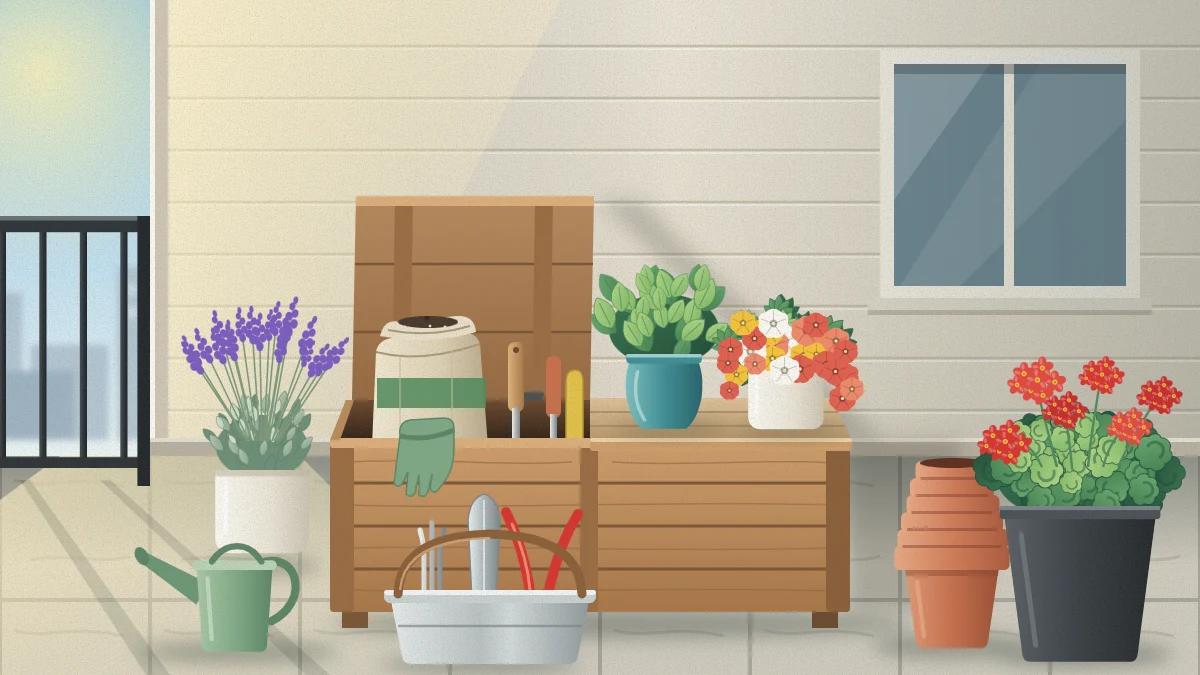
- A lidded bench or deck box: it holds bags, tools and spare pots and gives you somewhere to sit. Pick one that sheds rain and stands against the wall, away from the edge of the balcony.
- A caddy or bucket for hand tools: everything goes back into one container that you can carry from pot to pot and bring indoors.
- Nested pots: stack empty pots by size, largest on the outside, with saucers stacked beside them. One neat tower replaces a scattered heap.
- A work tray or tarp: a lightweight tray, an old shower curtain or a small tarp gives you a surface for potting. Spilled mix stays on it and goes back into the tub instead of down the drain.
For layout ideas beyond storage, see these ideas for arranging a small balcony garden.
Keeping potting mix and products in good condition
An open bag of potting mix left on the floor soaks up rain, grows algae and attracts fungus gnats and other pests. Fold the top over, clip it shut and stand the bag in a lidded bin, or tip what is left into the bin itself. Kept dry and covered, leftover mix stays usable for the next round of planting. The guide to potting soil for containers explains what to look for when you buy and when old mix is worth reusing.
Fertilizers and any other garden products need more care:
- Keep them in their original containers, so the label and its directions stay with the product.
- Close them tightly and keep them dry and out of direct sun.
- Store them out of reach of children and pets, ideally indoors in a high cupboard rather than in an unlocked box at floor level.
Weight, walls and what the building allows
Storage adds load as well as tidiness. Bags of potting mix, a full watering can and a packed deck box all sit on the same floor as your containers, and wet mix is far heavier than dry. Spread things out rather than stacking everything in one spot, and ask the building management or owner what the balcony is allowed to carry if you plan to keep a lot outside.
Wall-mounted racks, rails and hooks save floor space, but they belong only where the building allows them.
Good to know
Before attaching a rack, shelf or hook to a wall or railing, check the building rules or your lease, or ask the landlord. Use secure mounting made for the purpose and for your wall material, think about the weight of everything it will hold, including wet mix and water, and follow the manufacturer instructions for the item and its hardware. When in doubt, use freestanding storage on the floor.
Keep the drain and the exit clear
Two parts of the balcony should never be used for storage. The first is the floor drain or drainage outlet. Pots, bags and boxes parked over it trap water, and loose potting mix washed into it can block it. Sweep up spills rather than hosing them away.
The second is the doorway and the path to it. Keep the door able to open fully and the route across the balcony free of pots, cans and tools, so nobody trips and you can get in and out quickly. Light items such as empty plastic pots and trays should be weighed down, boxed or taken inside, because wind moves them easily.
A ten-minute weekly tidy
A short routine keeps clutter from building up again. Pick a regular day and work through the same steps:
- Return every tool to the caddy and wipe off wet mix.
- Remove spent flowers and dead leaves from pots and from the floor.
- Sweep, paying attention to the drain and the corners.
- Empty saucers that have stood full for a long time.
- Close bags and bins, and put away anything left out.
Tip
Apply a one-in, one-out rule to pots. When a new container arrives, an empty one you have not used leaves, either to a neighbor or to recycling where it is accepted.
End-of-season cleaning
When annuals finish, empty their pots rather than leaving them to sit through the cold months. Knock out the old root ball, brush off loose mix, scrub the pot inside and out with warm soapy water, rinse it and let it dry completely before stacking. Clean, dry pots nest neatly and are ready to plant when the season starts again.
Wipe and dry tools before storing them, and bring in anything that cracks in freezing weather, such as terracotta. The guide to a balcony garden in winter covers what to protect and what can stay out.
If nothing can stay outside
Some buildings do not allow storage on balconies at all, and some balconies are simply too exposed. In that case, keep the whole kit small enough to carry in one trip: tools in a caddy, a sealed tub of potting mix and a short stack of pots. A shelf in a hall closet, the space under a bed or a corner of a utility cupboard is enough.
Buy potting mix in small bags so you rarely have leftovers, and let the brush and dustpan live just inside the balcony door, where you will actually use them.
Frequently asked questions
How should I store an open bag of potting mix on a balcony?
Fold the top of the bag over, clip it closed and stand it inside a lidded bin, or tip the remainder into the bin. The goal is to keep rain, algae and insects out. If nothing can stay outside, a sealed tub in a closet works just as well.
Which gardening tools do I really need for a balcony?
A hand trowel, pruners or snips, a watering can with a long spout, gloves, a soft brush and dustpan, and a small tub for moistening and carrying potting mix cover nearly every container job. Long-handled tools and large sprayers are rarely useful in such a small space.
Can I put up shelves or hooks on a balcony wall for storage?
Only where the building allows it, so read your lease or ask the landlord first. If it is permitted, use fixings made for the purpose and for your wall material, consider everything the shelf will carry, and follow the maker's instructions. Freestanding shelves on the floor avoid the question entirely.