Growing Tomatoes on a Balcony in Containers
A step-by-step guide to one tomato plant in one pot: which varieties suit containers, how large the pot should be, planting deep, support, steady watering and harvest.
At a glance
What you need
- Young compact or patio tomato plant
- Large container with drainage holes
- Potting mix for containers
- Stake or tomato cage
- Soft plant ties
- Saucer
- Fertilizer labeled for tomatoes or vegetables
Tomatoes have a reputation for being difficult in pots, and most of that reputation comes from three avoidable mistakes: too little sun, too small a container and uneven watering. Get those right and growing tomatoes on a balcony is well within reach of a beginner.
This guide walks through one plant in one container, from choosing a variety to picking the fruit. If you are still deciding which crops to grow, start with the overview of a balcony vegetable garden and come back here.
What tomatoes need from your balcony
Tomatoes are warm-season, sun-hungry plants. They want a warm spot with about six to eight hours or more of direct sun a day. With much less, you tend to get a tall leafy plant and little fruit.
They are also killed by frost and stalled by cold. Plant outside only after the danger of frost has passed in your area and nights have warmed. Your local extension service can tell you when that usually is where you live.
Choose a variety that fits a container
The word on the label matters more than the picture.
- Determinate, bush, dwarf or patio types grow to a set size and then fruit, which makes them the natural choice for pots.
- Compact cherry types are forgiving, ripen early and keep producing small fruit over a long period.
- Indeterminate types keep growing taller all season. They can be grown on a balcony, but they need a very large container and strong support, and they catch the wind.
For a first attempt, a compact cherry or patio variety bought as a healthy young plant is the easier route.
Pick a large container and fresh potting mix
Size is where many balcony tomatoes go wrong. Extension guides commonly suggest a container of around 5 gallons (19 L) or more for one standard plant, and somewhat less for dwarf types. Treat that as their general guidance, not a promise, and go larger if you have the room. See University of Maryland Extension for more detail.
The container must have drainage holes. Fill it with potting mix made for containers. Garden soil compacts in a pot, drains poorly and may bring pests with it.
Good to know
A large, watered tomato container is a heavy planter. Wet mix, water and a fruiting plant weigh far more than the empty pot, so think about that weight and ask the building management or owner what your balcony is allowed to carry. Keep the pot on the floor inside the railing, with its support inside the pot. Do not tie or attach anything to the railing or wall unless the building rules or your lease allow it; if they do, use secure mounting made for the purpose and follow the manufacturer instructions for the planter and its hardware.
Plant it deep and add the support now
Tomatoes can grow roots along a buried stem, so they are planted deeper than most plants. A deeper root system helps the plant stay steady and find water.
- Water the young plant in its nursery pot and let it drain.
- Fill the container with moist potting mix to a few inches below the rim.
- Pinch off the lowest leaves, leaving the top several sets.
- Dig a deep hole and set the plant so the bare part of the stem is buried, with the remaining leaves clear of the mix.
- Firm the mix gently around the stem.
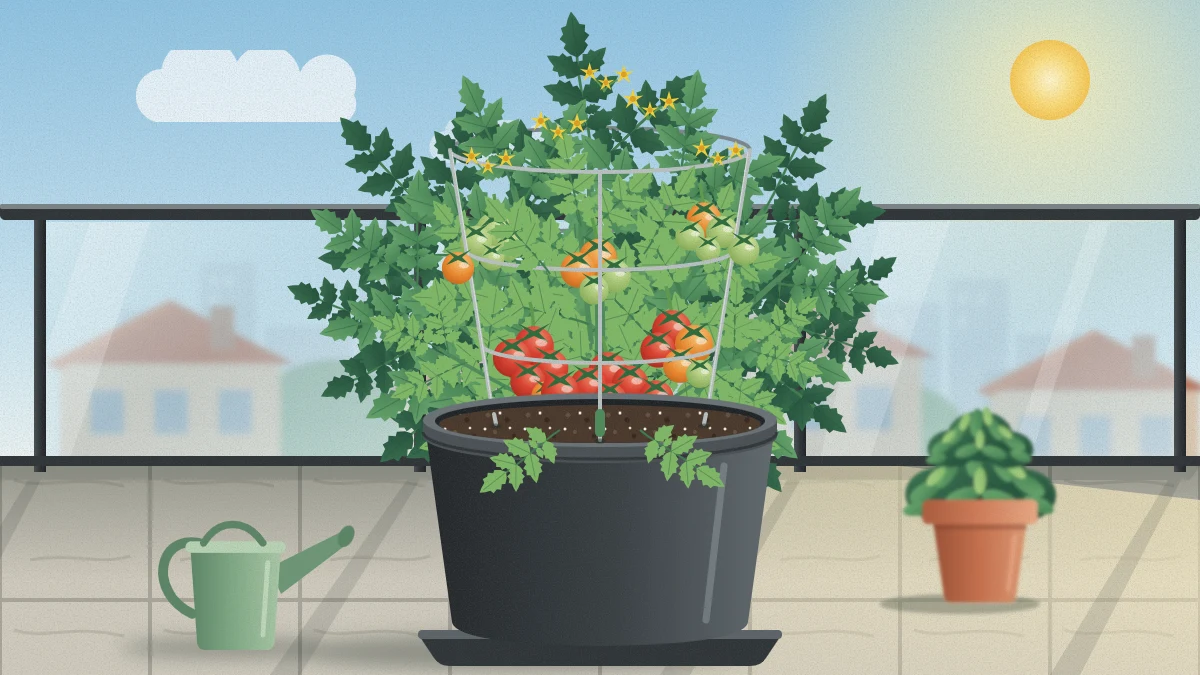
- Push a stake or cage into the container now, while the roots are small and you will not damage them.
- Water thoroughly until water runs from the drainage holes.
Keep the stake or cage inside the container so the whole thing stands on the floor as one unit. As the plant grows, tie the stems loosely to the support with soft ties, leaving room for the stem to thicken.
Keep the moisture steady and feed regularly
Consistent moisture is the most important part of tomato care in a pot. Swings between very dry and soaked are linked with blossom end rot, a dark sunken patch on the bottom of the fruit, and with fruit that splits.
There is no calendar rule. Check the mix before you water by pushing a finger about 2 in (5 cm) in, and check daily in hot weather, because a large plant in full sun can empty a container quickly. When it feels dry at that depth, water slowly until it drains. The full method is in the guide to watering balcony plants.
Feeding through the season
A fruiting tomato uses up the nutrients in a container well before the season ends. Use a fertilizer labeled for tomatoes or vegetables, follow the product label for rate and timing, and never use more. Too much nitrogen tends to produce lush leaves at the expense of fruit. For how the different types work, see fertilizing container plants.
Shelter the plant from wind
A tall, leafy plant acts like a sail. Choose a sheltered spot, against a wall if possible, and use a low, wide container that is hard to tip. Compact varieties are an advantage here. Before a storm, move the pot to the most protected corner. More ideas are in the guide to a windy balcony garden.
Common troubles in brief
- Flowers but no fruit. Often associated with very hot days, cool nights or too little sun. A gentle shake of the plant can help pollen move.
- Dark patch on the fruit base. Commonly associated with uneven moisture. Remove affected fruit and steady your watering.
- Yellowing lower leaves. There are several possible causes, including natural aging, hunger, overly wet mix and disease. Check the moisture and when you last fed before changing anything.
- Insects on new growth. Look closely, remove them by hand or knock them off with a firm spray of water.
Harvest, and a note on pets
Pick tomatoes when they have reached full color for the variety and give slightly when squeezed. Fruit that has begun to color will usually finish ripening indoors if cold weather or a storm is coming. Wash it before eating.
If animals share your home, note that the ASPCA entry for tomato plant lists the plant, meaning its green parts, as toxic to dogs, cats and horses. Place the container where pets cannot chew the leaves and stems.
Frequently asked questions
How big a pot does a tomato plant need?
Extension guides commonly suggest around 5 gallons (19 L) or more for one standard tomato plant, and somewhat less for dwarf and patio types. That is general guidance, not a promise of a harvest. A larger container holds moisture longer and gives roots more room, so go bigger if your space allows.
Why does a potted tomato have flowers but no fruit?
There are several possible causes. Flowers often drop without setting fruit during very hot days or cool nights, and too little direct sun is another common factor. Pollen may also need help moving on a sheltered balcony, so a gentle shake of the flowering stems can be worth trying.
Can I grow a tall indeterminate tomato on a balcony?
It is possible, but harder. Indeterminate tomatoes keep growing all season, so they need a very large container, strong support set inside the pot and a sheltered position, since a tall plant catches the wind. Determinate, dwarf, patio and compact cherry types are usually easier to manage in a small space.