Growing Lettuce in Containers: Salad Greens for Small Spaces
Sow, thin, water and pick lettuce in a shallow planter: the types that suit pots, how to harvest so plants regrow, and what to do when summer heat makes it bolt.
At a glance
What you need
- Wide, shallow container with drainage holes
- Potting mix for containers
- Lettuce seed or young plants
- Watering can with a fine spray
- Scissors or snips
- Saucer
If your balcony gets only a few hours of sun and you want something edible quickly, lettuce is a strong first choice. Growing lettuce in containers needs no deep pots, no stakes and no long wait: many loose-leaf types can be picked within weeks of sowing.
The one thing lettuce asks for is cool, steady conditions. Work with that and a single shallow planter can keep you in salad leaves through spring and again in fall.
Why lettuce suits a balcony
Lettuce has shallow roots, so it is content in a wide, shallow container that would be useless for tomatoes. It grows fast. And it is fine with roughly three to five hours of direct sun, which makes it one of the few crops that suit a part-sun balcony. If you are unsure what your space gets, the guide to balcony sunlight shows how to measure it.
Lettuce is happiest in cool weather. In heat it starts bolting, which means it sends up a flower stalk, and the leaves commonly turn bitter. That is why spring and fall are the main lettuce seasons in most places. For other crops that fit a small space, see the overview of a balcony vegetable garden.
Choose a container and potting mix
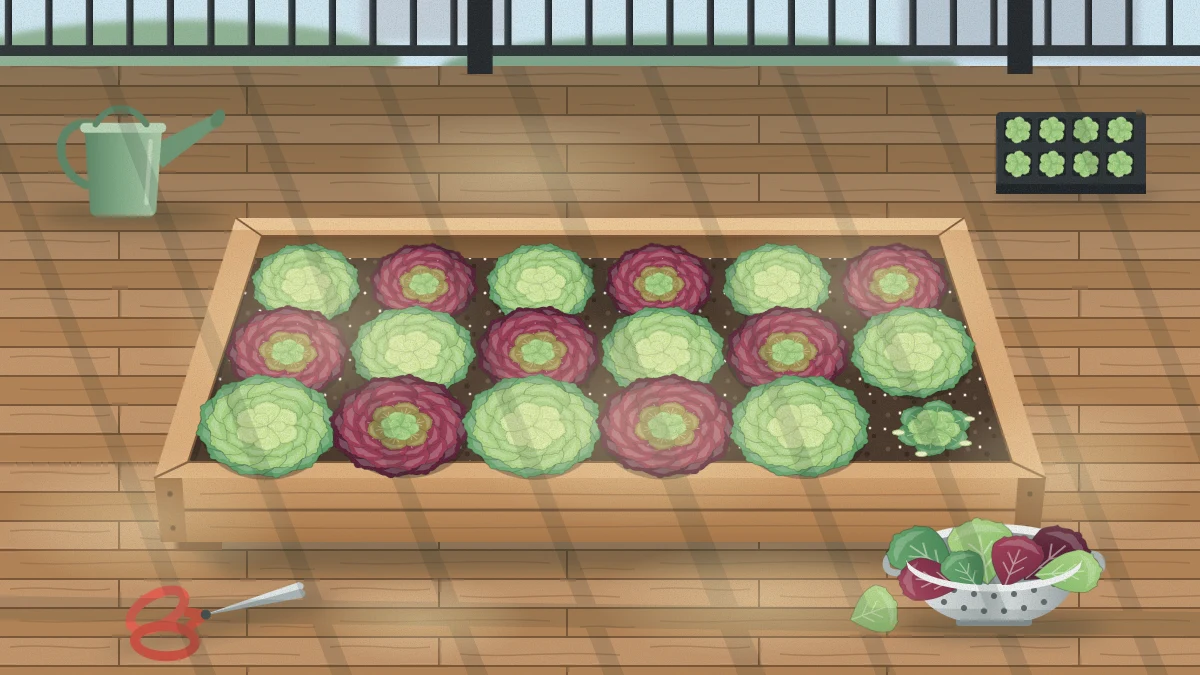
Wide and shallow works well. Extension guides commonly suggest about 6 in (15 cm) of potting mix or more for lettuce; treat that as a rough minimum, since a deeper container holds moisture longer. A trough, a window-box style planter set on the floor or a broad bowl all work, as long as there are drainage holes.
Fill it with fresh potting mix made for containers, not garden soil. Moisten the mix before you sow so that water does not wash the seed into one corner.
Pick a type of lettuce
- Loose-leaf is the easiest. It forms an open rosette instead of a head, grows quickly and regrows after picking. Green and red varieties look good together.
- Butterhead forms a soft, loose head with tender leaves and stays fairly compact.
- Romaine grows upright with crisp leaves. It takes longer and wants a little more room.
- Salad mixes are packets of several lettuces, sometimes with other greens, meant to be sown thickly and cut young.
For hot climates or late spring sowings, look for varieties described on the packet as slow to bolt or heat tolerant.
Sow seed or set out young plants
Lettuce is one of the easier crops to start from seed, right in its final container.
- Fill the container to about an inch (2.5 cm) below the rim and level the moist mix.
- Scatter the seed thinly over the surface, or sow in shallow rows a few inches apart.
- Cover very lightly with a thin dusting of mix. Lettuce seed is small and should not be buried deep.
- Water gently with a fine spray so the seed stays in place.
- Keep the surface evenly moist until seedlings appear.
- Thin the seedlings once they have a few leaves, snipping the extras at the base. The thinnings can be washed and eaten.
Spacing depends on how you plan to harvest. For baby leaves, plants can stay close, an inch or two apart. For full-sized loose-leaf plants or heads, follow the spacing on the seed packet, often several inches between plants.
Young plants from a garden center give you a head start. Set them at the same depth they sat in their tray, firm them in and water well. The timing of a first sowing fits naturally into a spring balcony garden checklist, since lettuce tolerates cool conditions that would stall summer crops. A hard frost can still damage young plants, so check local advice from your extension service.
Water and feed lightly
Shallow containers dry out quickly, and lettuce that dries out tends to turn bitter or bolt sooner. Aim to keep the mix evenly moist, never waterlogged. Check instead of following a schedule: push a finger into the mix, and water when the top inch feels dry. In warm, breezy weather a shallow planter may need checking more than once a day, while in cool, still weather it can stay moist for days.
Water at the base of the plants where you can, so soil is not splashed onto the leaves.
Lettuce is a light feeder with a short life. If the potting mix already contains fertilizer, a quick crop may need nothing more. For a longer cut-and-come-again planting, a fertilizer labeled for vegetables can help; follow the product label for rate and timing, and never use more.
Harvest so the plants keep producing
There are two cut-and-come-again methods, and both suit a small planter.
- Pick outer leaves. Take the largest outside leaves from each plant and leave the small ones in the center to grow on. This gives a little, often.
- Cut the whole plant. Cut across about an inch above the base, leaving the growing point intact. Many loose-leaf types regrow for a second and sometimes a third cut, though each is usually smaller.
Harvest in the cool of the morning if you can, when leaves are crisp. Wash them before eating.
Tip
A common practice for a steady supply is to sow a small new batch every couple of weeks during cool weather, in a second container or an empty patch of the first. It is a habit to adapt, since growth speeds up and slows down with the season.
What to do in summer
When hot weather arrives, lettuce usually bolts however well you care for it. A tall central stalk and bitter leaves tell you the plant is finished; pull it and compost it.
You have two options for the hot months. Move the container to the shadiest, coolest part of the balcony and try a heat-tolerant variety, accepting a smaller harvest. Or simply pause, grow something that likes heat, and sow lettuce again as temperatures drop toward fall.
Slugs and aphids
Lettuce has few problems on a balcony, but two pests turn up. Slugs can arrive in the root ball of a bought plant and leave ragged holes and silvery trails. Look under the container rim and saucer in the evening and remove them by hand.
Aphids are small soft insects that cluster in the folds of the leaves. Check the center of the plants regularly. Knock them off with a firm spray of water, pick off badly affected leaves, and rinse harvested leaves well. Since lettuce is quick to regrow, replacing a heavily infested planting with a fresh sowing is often the simplest answer.
Frequently asked questions
How deep does a container need to be for lettuce?
Lettuce has shallow roots, so it does not need a deep pot. Extension guides commonly suggest about 6 in (15 cm) of potting mix or more as a rough minimum. A somewhat deeper container holds moisture longer, which helps in warm or breezy weather. Width matters more than depth for fitting in several plants.
Why has my lettuce gone tall and bitter?
That is usually bolting: the plant sends up a flower stalk and puts its energy into seed. It is commonly associated with hot weather and long days, and dry potting mix can bring it on sooner. Once a plant has bolted it does not go back, so pull it and sow again in cooler weather.
Will lettuce regrow after I cut it?
Many loose-leaf types do. Either pick only the outer leaves and leave the center to grow, or cut the whole plant about an inch (2.5 cm) above the base so the growing point stays intact. Regrowth is usually smaller each time, and heading types such as romaine are less likely to regrow well.