Shade Balcony Flowers: What Blooms With Little Direct Sun
How to tell bright shade from deep shade, which flowers and foliage plants give color in each, and how watering and care change when pots get little sun.
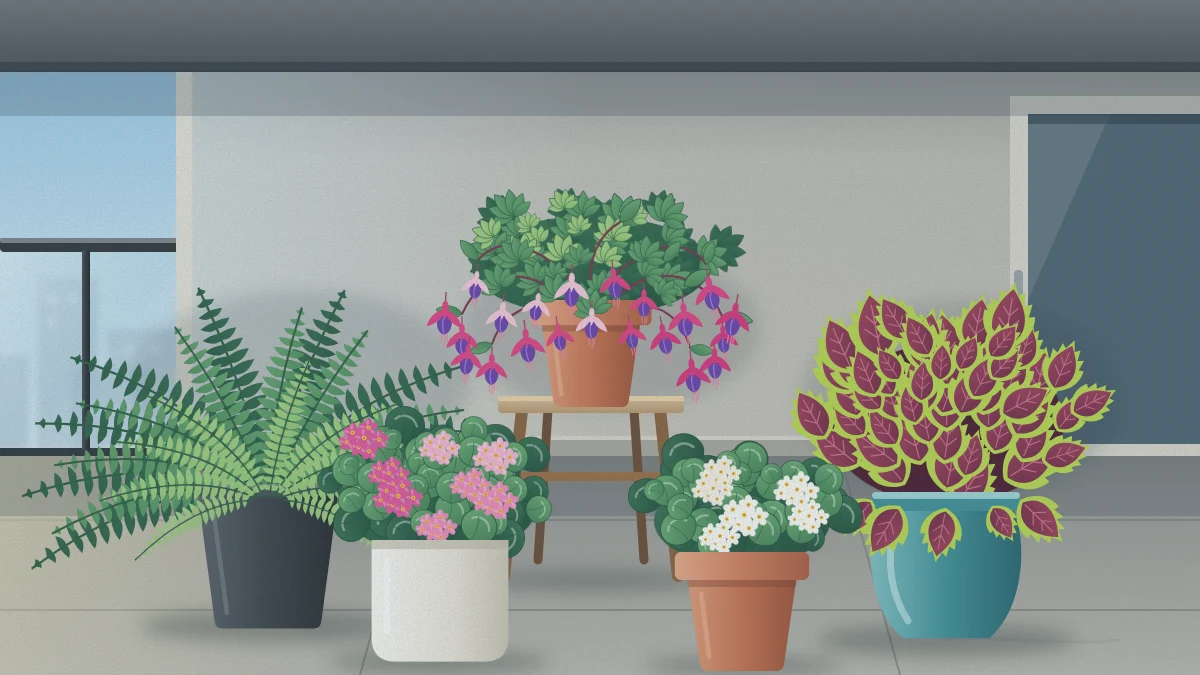
A balcony tucked under the one above, or one that faces north, can feel like a lost cause for color. It is not. Shade balcony flowers exist, and several of them are among the easiest container plants to grow, but the list is shorter than for sun and the results depend on how much light you really have.
So the first job is to look honestly at your shade. After that, choosing plants is simple. (Directions here assume the Northern Hemisphere, where a north-facing balcony gets the least direct sun.)
Work out what kind of shade you have
“Shade” covers very different conditions. As rough guides, part shade means roughly three to six hours of direct sun a day, and shade means less than about three. Within shade, two situations matter:
- Bright open shade: no direct sun, or a couple of hours of gentle morning sun, but a wide view of open sky. You can read comfortably there all day. Most of the plants below flower well in this.
- Deep shade: a recessed balcony with walls on three sides, a low ceiling and a solid balustrade. Light comes from one narrow direction. Flowers are sparse here, and foliage plants are the better choice.
Light also changes across a single balcony. The front edge is often much brighter than the back wall. The guide to checking how much sun a balcony gets shows how to map it over a day.
Flowers that bloom in part shade to shade
Begonias
Wax begonias form neat mounds of glossy leaves dotted with small white, pink or red flowers, and they flower steadily without deadheading. Tuberous begonias have much larger, rose-like blooms and prefer shelter from wind and hot afternoon sun. Both dislike soggy mix.
Impatiens
A classic for shade, covering itself in flat flowers in many colors. Impatiens wilt quickly when dry and recover quickly when watered, so they are good at telling you when to check the pot.
Fuchsia
Fuchsias carry dangling, often two-tone flowers and prefer cool, bright shade out of the wind. Trailing types are the traditional choice for a basket, and upright types suit a pot on a stand. They may slow down in very hot weather.
Torenia (wishbone flower)
A low, bushy or trailing annual with small trumpet flowers in blue, purple, pink and yellow. It copes with warmth and humidity better than many shade flowers.
Lobelia
Masses of tiny blue, white or purple flowers on mounding or trailing stems. Lobelia is at its best in part shade and cool weather and often fades in midsummer heat. Trimming it back lightly can bring a second flush.
Foliage for color where flowers are few
In deeper shade, leaves do the work that petals cannot.
- Coleus: leaves in burgundy, lime, pink and copper. Pinch out the tips to keep it bushy.
- Ferns: soft texture and fresh green. They prefer evenly moist mix and shelter from drying wind.
- Heuchera: a perennial with ruffled leaves in purple, caramel, silver or lime.
- Ivy: a trailing evergreen that softens the edge of a pot.
- Hostas: bold leaves in green, blue-green and variegated forms. They need a big pot and go dormant in winter.
Light and habit at a glance
| Plant | Light it tolerates | Habit |
|---|---|---|
| Wax begonia | Part sun to shade | Mounding |
| Tuberous begonia | Part shade to shade | Upright or trailing |
| Impatiens | Part shade to shade | Mounding |
| Fuchsia | Part shade to bright shade | Trailing or upright |
| Torenia | Part shade to shade | Mounding or trailing |
| Lobelia | Part shade | Mounding or trailing |
| Coleus | Part shade to shade | Upright, bushy |
| Ferns | Shade | Arching |
| Heuchera | Part shade to shade | Low mound |
| Hosta | Part shade to shade | Broad clump |
Honest limits, and how to work with them
Even the best shade plants produce fewer flowers than sun lovers do in full sun, and nothing blooms in a dark corner. If a plant labeled for shade grows thin and stretched with almost no buds, too little light is a likely reason, and moving it toward the front edge is the first thing to try.
You can make a dim balcony look brighter with your choices:
- Pale flowers, especially white and soft pink, show up where dark red and purple disappear.
- Variegated and chartreuse leaves read as light. Lime coleus or a white-edged hosta can stand in for a flower.
- Light-colored pots and a pale wall bounce a little more light around.
- Raising pots on a stand lifts them above a solid balustrade into better light.
If part of your balcony does get about six hours of direct sun, save that spot for the plants in the guide to the best flowers for a sunny balcony.
How care differs in shade
Shaded pots dry more slowly than pots in sun, so overwatering is the more common mistake. Push a finger about 2 in (5 cm) into the mix and water only when it feels dry at that depth. Make sure every container has drainage holes and that saucers do not stay full.
Still, damp air encourages problems. Space pots so air can move between them, and water the mix rather than the leaves. Powdery mildew, a white coating on leaves, is more likely on crowded plants. Remove affected leaves and thin things out. Slugs and snails also like cool, damp shade. Check under pots and rims in the evening and remove them by hand.
Good to know
Fuchsias and trailing begonias are often grown in hanging baskets, and a hosta needs a large pot. Before hanging or attaching anything, check the building rules or your lease, or ask the landlord, and use secure mounting made for the purpose. Consider the weight of wet mix, water and the container, and follow the manufacturer instructions for the planter and its hardware. The guide to hanging baskets on a balcony covers placement in detail.
A note for pet owners
The ASPCA entry for begonia lists begonia as toxic to dogs, cats and horses. For every other plant mentioned here, including the foliage plants, look it up on the ASPCA plant list before you buy, and place pots where a curious animal cannot chew them.
Frequently asked questions
What flowers grow on a north-facing balcony?
In the Northern Hemisphere a north-facing balcony gets little direct sun, so choose plants that flower in shade: wax and tuberous begonias, impatiens, fuchsia and torenia. Add coleus, ferns or heuchera for leaf color. How well they bloom depends on how much open sky the balcony sees.
Will anything flower in a very dark balcony corner?
Realistically, no. Flowering takes energy that plants get from light, and a deep recess does not supply enough. Use foliage plants such as ferns there, choose pale or variegated leaves to brighten the spot, and keep flowering pots toward the front edge where the light is stronger.
Do shaded balcony pots need less water?
Usually they dry more slowly than pots in sun, but wind, pot size and the plant itself still matter, so there is no fixed answer. Check the mix with a finger about 2 inches down and water when it feels dry at that depth. Empty saucers that stay full.