How to Harvest Herbs in Pots So They Keep Growing
Where to cut basil, mint, parsley, chives, rosemary and other potted herbs so the plant branches and keeps producing, plus what to do when basil has already flowered.
At a glance
What you need
- Clean, sharp snips or scissors
- Cloth for wiping the blades
- Small bowl or basket
- Glass of water for soft stems
Many new growers barely touch their herbs because they are afraid a cut will kill the plant. The opposite is usually closer to the truth. Most herbs respond to regular, careful cutting by growing bushier, and a basil plant that is never picked tends to shoot up tall, flower and slow down.
Learning how to harvest herbs comes down to one general rule and three ways of cutting, depending on how the plant grows. Once you can tell which group a herb belongs to, you will know where to put the snips.
The general rule: a little, often
Leaves are how the plant feeds itself, so a plant stripped bare has nothing left to regrow with. A common guide is to leave about two thirds of the plant in place each time you harvest, then let it recover before you cut again.
Small, frequent harvests are kinder than one big one. Taking a few stems for dinner several times over a couple of weeks keeps the plant producing fresh growth, which is also the most tender part.
Tip
Let a newly bought or newly potted herb settle first. Wait until you can see fresh growth and the plant has clearly put on size before the first real harvest. Pinching a leaf or two in the meantime does no harm.
What you need and when to cut
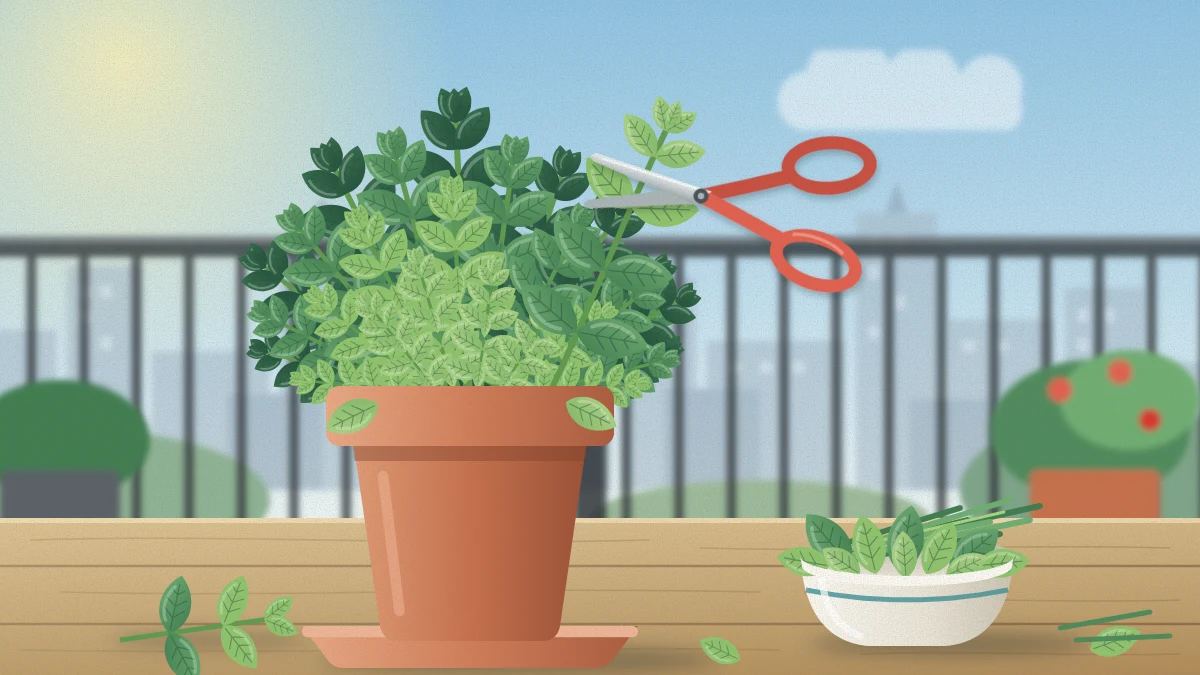
Use clean, sharp snips or scissors. A clean cut heals more neatly than a torn stem, and wiping the blades before you start lowers the chance of carrying problems from one plant to another. Soft stems such as basil can also be pinched off between thumb and fingernail.
The usual advice is to harvest in the morning, after any dew has dried and before the day heats up, because leaves tend to be at their most fragrant then. If you only remember at dinnertime, cut anyway. A harvest at the “wrong” hour is still better than none.
Branching herbs: basil, mint and oregano
These herbs carry their leaves in pairs along an upright stem. Where each pair of leaves joins the stem, there are two tiny buds waiting to grow.
- Follow a stem down from the tip to a pair of healthy leaves.
- Cut the stem just above that pair, leaving a short stub of about a quarter inch (6 mm).
- Leave at least a few pairs of leaves below the cut.
- Over the following days, watch the two buds at that point grow into two new shoots.
One stem becomes two, two become four, and the plant fills out sideways instead of stretching upward. Picking single large leaves off the bottom does the reverse: it leaves a bare stalk with a tuft on top.
Basil that has gone tall and flowered
Once basil flowers, it puts its energy into seed and leaf production generally slows. Pinch out flower buds as soon as you see them forming at the tips. If the plant is already tall and in bloom, cut each flowering stem back to just above a lower pair of leaves, taking no more than about a third of the plant at once. It often branches again from there, though an old plant late in the season may not bounce back fully.
Clumping herbs: parsley, cilantro and chives
These grow from a central point at the base, and new leaves emerge from the middle of the clump. The method is the same for all three: take from the outside and leave the center alone.
- Parsley and cilantro: cut the outer stems near the base of the plant, whole stem and all. Snipping only the leafy tops leaves stubs that do not regrow. Leave the young inner stems to grow on.
- Chives: gather a small bunch of leaves and cut them about an inch or two (2.5 to 5 cm) above the potting mix. Work around the clump rather than shearing the whole thing, and it will send up new leaves from the base.
Cilantro has a short life whatever you do. In warm weather it starts bolting, sending up a tall stalk with feathery leaves, and leaf harvests end soon after. Pick it generously while it is leafy.
Woody herbs: rosemary, thyme and sage
These have older stems that turn brown and woody near the base, with soft green growth at the tips. Snip the soft green tips, a few inches at a time, cutting just above a set of leaves.
Avoid cutting back into bare old wood. Woody stems with no leaves on them often fail to sprout again, so a hard cut can leave a permanent gap. Stay in the leafy part of the stem and the plant will keep branching.
These herbs grow more slowly than basil or mint, so take less at a time, especially from a young plant. Ease off toward the end of the growing season so new growth is not left soft going into cold weather.
Help the plant recover
A herb that is harvested regularly is constantly rebuilding, and in a pot it can only draw on what the potting mix holds. Check the mix before you water, keep the plant in the light it prefers, and feed lightly during active growth. The basics, including why herbs usually need less than flowering plants, are in the guide to fertilizing container plants.
If a plant stays thin however carefully you cut, the cause is often light, pot size or crowding rather than harvesting. The setup advice in the balcony herb garden guide covers those points.
When you have more than you can use
Stand soft stems such as basil, parsley and cilantro in a glass of water and use them within a few days. For a larger surplus, woody herbs dry well when small bundles are hung somewhere airy and out of direct sun, and soft herbs can be chopped and frozen. Wash herbs before you eat them.
At the end of the season
Annuals such as basil and cilantro will not survive frost. Before the first cold night, harvest everything usable and compost the rest.
Perennials are different. Stop heavy cutting as the weather cools and leave the plant its foliage going into winter. Chives and mint die back and usually return in spring, while rosemary, thyme and sage keep some leaves. How well each survives in a pot depends on your climate, which is one of the things compared in the list of the best herbs for a balcony.
Frequently asked questions
How much of a herb plant can I cut at one time?
A common guide is to take no more than about a third and leave about two thirds of the plant in place. The remaining leaves feed the regrowth. Then give the plant time to produce fresh shoots before the next harvest. Slow woody herbs and young plants are better with smaller cuts.
My basil has flowered. Is it too late to harvest it?
The leaves can still be picked, though growth generally slows once basil sets flowers. Cut each flowering stem back to just above a lower pair of leaves, without removing more than about a third of the plant. It often branches again, but an older plant late in the season may only partly recover.
Why did my parsley stop growing after I cut it?
One possibility is that the inner stems were cut. Parsley grows from the middle of the clump, so removing the center takes away the newest growth. Cut the outer stems near the base instead and leave the young inner ones. Low light, a small pot or cold weather can also slow regrowth.