Best Herbs for a Balcony: 9 Easy Choices by Sunlight
Nine easy herbs sorted by the light they need, with a comparison table, notes on wind and winter, and what to know before you buy for a sunny or part-sun balcony.
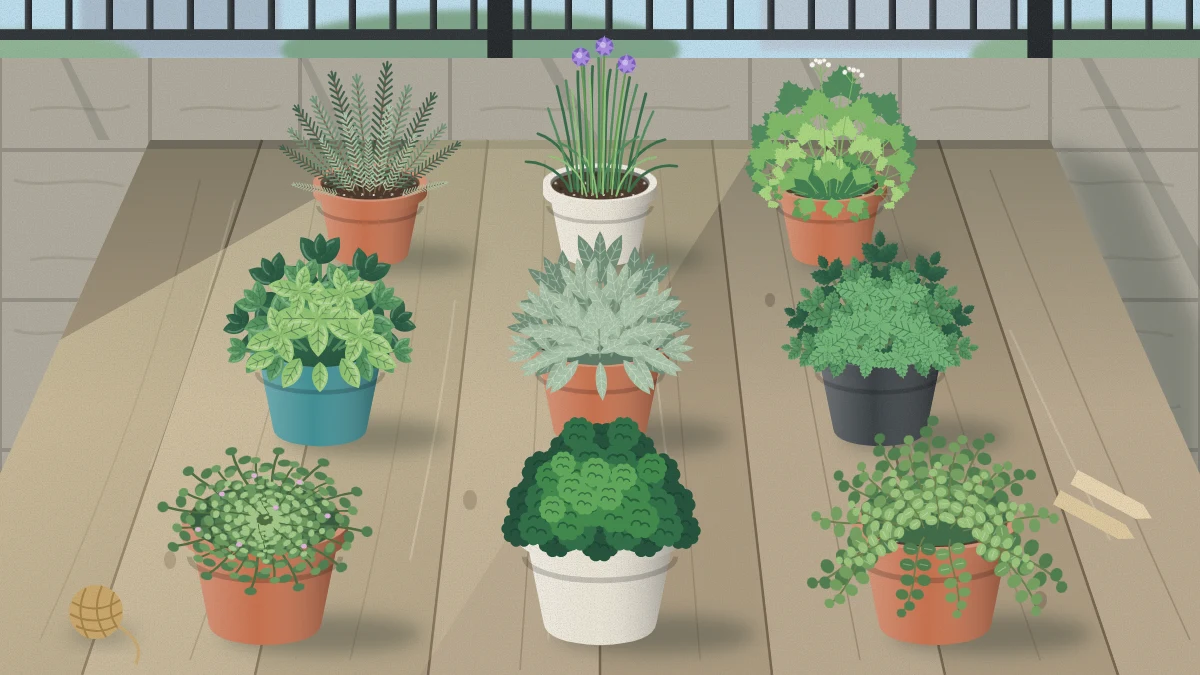
Choosing herbs gets much easier once you know how much direct sun your balcony receives. The best herbs for a balcony are simply the ones that match your light, cope with life in a container, and end up in food you actually cook.
The nine below are common, easy to find as young plants, and sorted into two groups: those that want a sunny spot and those that manage with less. The light terms are rough guides, so measure how much sun your balcony gets before you buy if you have not done that yet.
Five herbs for a sunny balcony
Full sun means about six hours or more of direct sun a day. These five come from warm, bright places and tend to sulk in shade, growing thin and pale with less flavor.
- Basil is a tender annual, usually a bushy plant 12 to 24 in (30 to 60 cm) tall. It is thirstier than the other sun lovers and likes evenly moist potting mix. The thing to know: it is a warm-weather plant only. Cold nights blacken the leaves, so wait until after the danger of frost has passed in your area and nights have warmed.
- Rosemary is a woody evergreen perennial in mild climates and can grow into a shrub, so give it a roomy pot. It prefers to dry out somewhat between waterings and dislikes sitting wet. In cold-winter areas it often does not survive outdoors in a container.
- Thyme is a low, spreading perennial, often under 12 in tall, with tiny leaves. It likes a free-draining mix on the dry side. It suits a wide, shallow pot and can trail over the rim.
- Oregano is a spreading perennial that forms a loose mound. It also prefers to dry a little between waterings. Regular cutting keeps it compact; left alone it gets leggy and flowers.
- Sage is a small woody perennial with soft gray-green leaves, often 12 to 24 in tall. It wants good drainage and resents soggy mix. Plants become woody after a few years and are commonly replaced.
Four herbs for part sun
Part sun or part shade means roughly three to six hours of direct sun. These four tolerate it well, and in hot climates they often look better with some afternoon shade.
- Parsley is a biennial that most people grow as an annual. It forms a leafy clump around 12 in tall and likes steady moisture. It has a long taproot, so a deeper pot helps.
- Chives are a hardy perennial that grows in a grassy clump about 12 in tall. They like evenly moist mix. The clump dies back in cold weather and usually returns in spring.
- Mint is a vigorous perennial that likes moisture and tolerates less sun than most herbs. The thing to know: it spreads by runners and crowds out neighbors, so give it a pot of its own.
- Cilantro is a short-lived annual that prefers cool weather. In heat it tends toward bolting, which means it sends up a flower stalk and goes to seed quickly. Grow it in spring and fall, and expect to re-sow rather than keep one plant all season.
The nine herbs at a glance
Use this table as a starting point, then read the plant label, because varieties differ.
| Herb | Light | Moisture preference | Annual or perennial |
|---|---|---|---|
| Basil | Full sun | Evenly moist | Annual |
| Rosemary | Full sun | Dries somewhat between waterings | Perennial in mild climates |
| Thyme | Full sun | On the dry side | Perennial |
| Oregano | Full sun | On the dry side | Perennial |
| Sage | Full sun | On the dry side | Perennial |
| Parsley | Part sun to full sun | Evenly moist | Biennial, grown as an annual |
| Chives | Part sun to full sun | Evenly moist | Perennial |
| Mint | Part sun or part shade | Moist | Perennial |
| Cilantro | Part sun, cool weather | Evenly moist | Annual |
The moisture column also tells you which herbs can share a pot. Rosemary, thyme, oregano and sage like similar conditions. Basil and parsley pair well. Mint stays alone.
How herbs handle balcony wind
Balconies are often windier than a garden at ground level, and wind dries both leaves and potting mix. Woody herbs with small, tough leaves, such as rosemary, thyme, oregano and sage, usually cope well.
Basil is the opposite. Its large, soft leaves tear and bruise in gusts, and the plant wilts quickly when the mix dries. Give basil the most sheltered sunny spot you have, low down and against a wall. Parsley and cilantro sit in between and appreciate some shelter too.
Perennial herbs in pots over winter
Whether a perennial herb comes back next year depends on your climate. Roots in a container are more exposed to cold than roots in the ground, so a plant that is hardy in a garden bed may still struggle in a pot.
Check your zone on the USDA Plant Hardiness Zone Map and compare it with the hardiness on the plant label. Chives, thyme, oregano and mint are generally the tougher ones. Rosemary is commonly the first to be lost in a cold winter. If a herb is borderline where you live, treat it as an annual and count any survivor as a bonus.
A note for homes with pets
Good to know
The ASPCA lists basil as non-toxic to dogs and cats, and it lists chives and mint as toxic to dogs, cats and horses. Being listed as non-toxic by the ASPCA does not make a plant pet food, because any plant can upset a stomach if chewed. For the other herbs here, check the ASPCA plant list before buying, and keep pots out of reach of animals that chew.
How many herbs to start with
Three or four is plenty for a first season. Pick the ones you reach for most in the kitchen, check them against your light, and buy healthy young plants rather than starting everything from seed. Cilantro is the exception, since it grows easily from seed sown directly in its pot.
Once you have chosen, the next questions are pot size, potting mix and layout, which are covered in the guide to setting up a balcony herb garden. And because regular cutting is what keeps most herbs bushy, it is worth reading how to harvest herbs without weakening the plant before you take your first handful.
Frequently asked questions
Which herbs grow well together in one pot?
Group herbs by how much moisture they like. Rosemary, thyme, oregano and sage all prefer mix that dries a little between waterings, so they can share a wide container. Basil and parsley both like steady moisture. Mint spreads by runners and tends to take over, so it is usually given its own pot.
Can I grow herbs on a balcony that gets only morning sun?
Often, yes. If the morning sun adds up to roughly three to six hours, parsley, chives, mint and cilantro are reasonable choices. Sun-loving herbs such as basil and rosemary may survive but usually grow thinner and slower. Time the direct sun on a clear day before deciding what to buy.
Will my potted herbs come back next year?
It depends on the herb and your climate. Basil and cilantro are annuals and finish within one season. Chives, thyme, oregano, sage and mint are perennials, but roots in a pot are more exposed to cold than roots in the ground. Compare the hardiness on the plant label with your USDA zone.